
OVERVIEW
About Clear Toaster
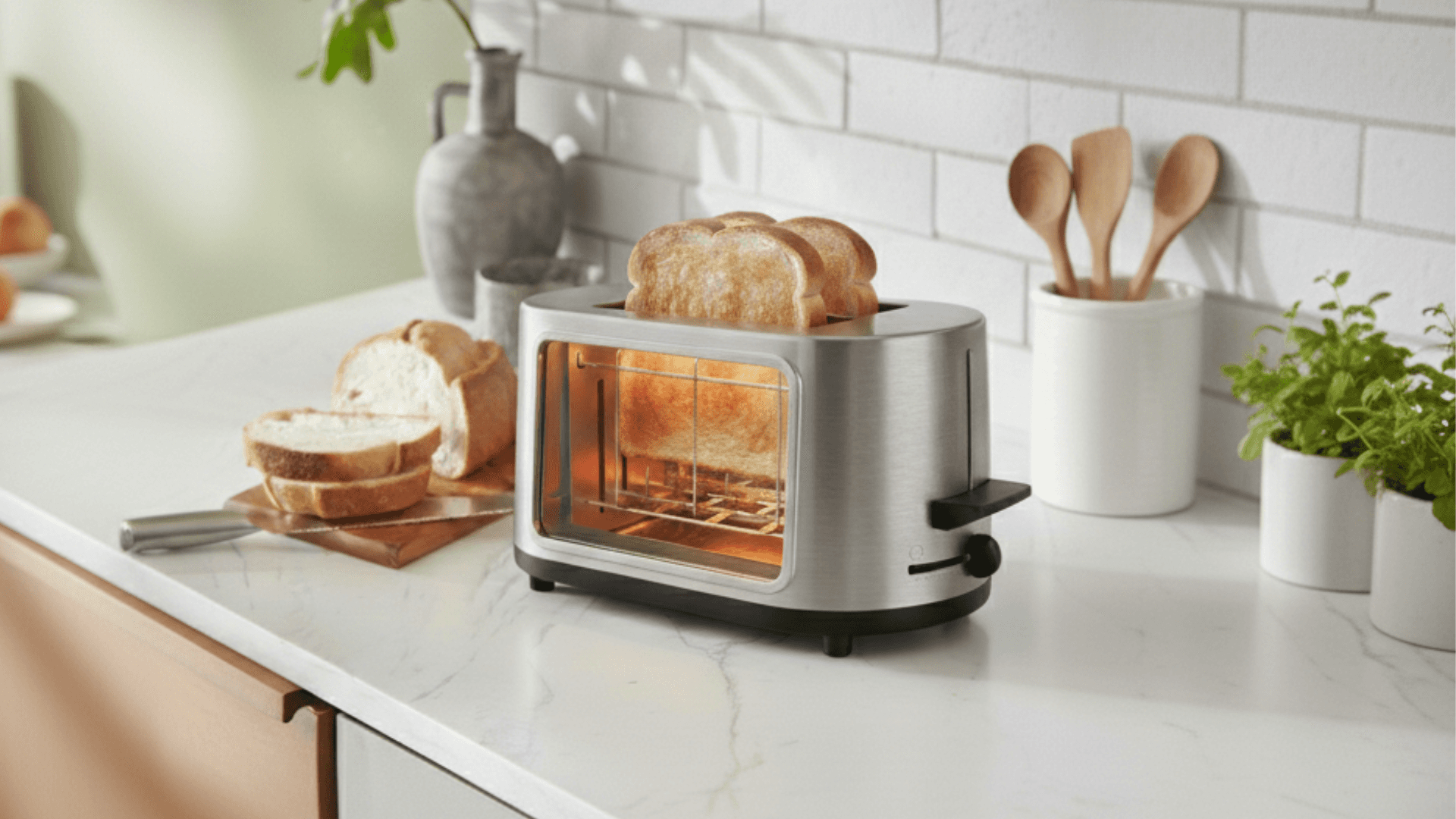
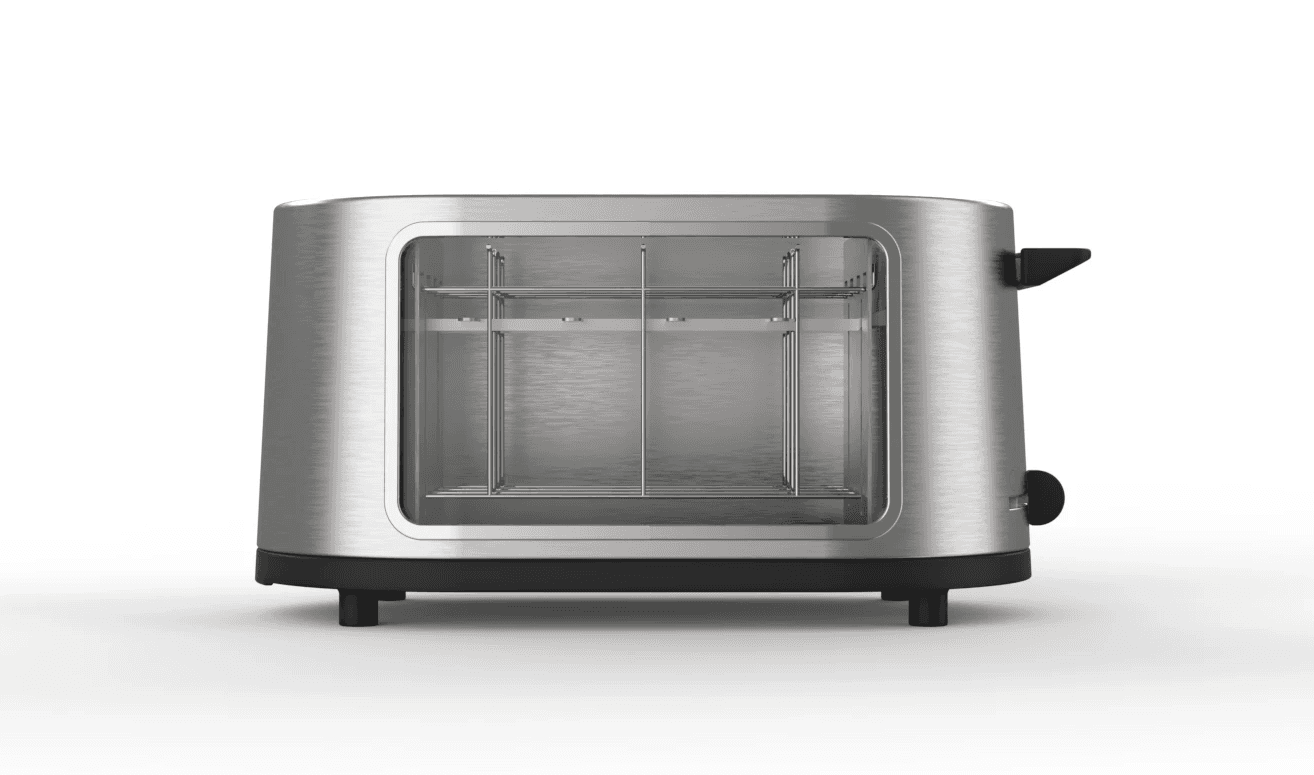
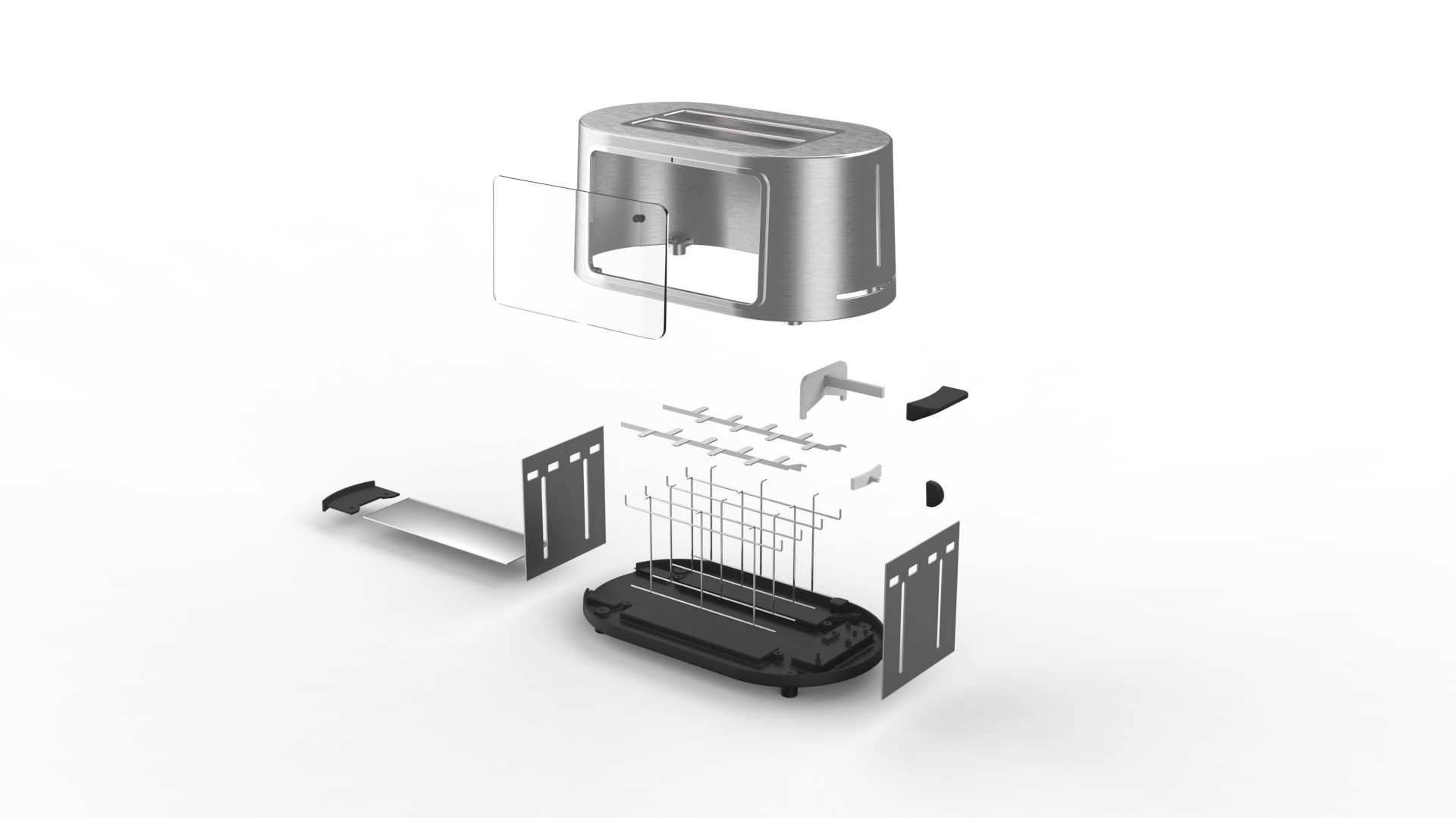
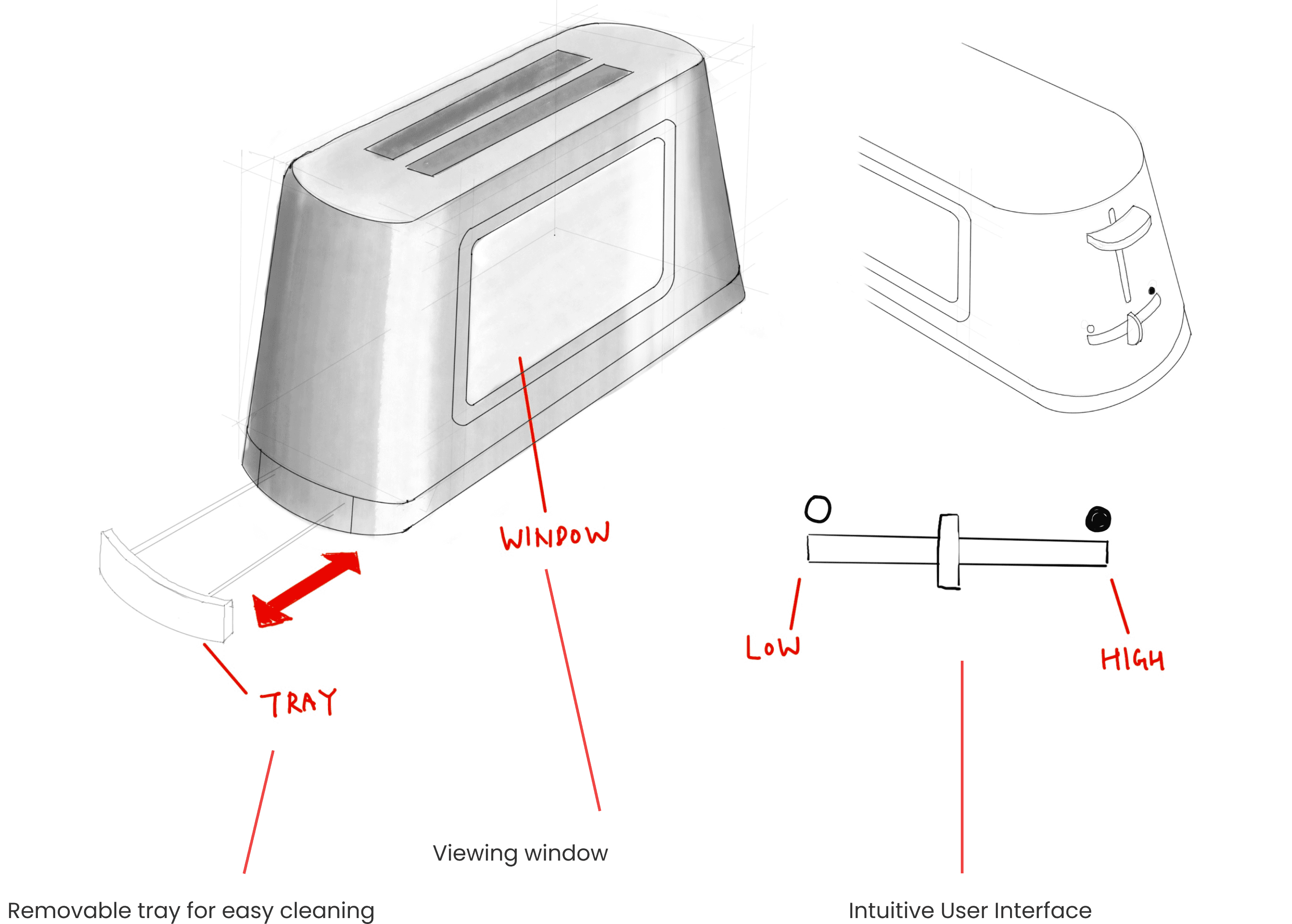
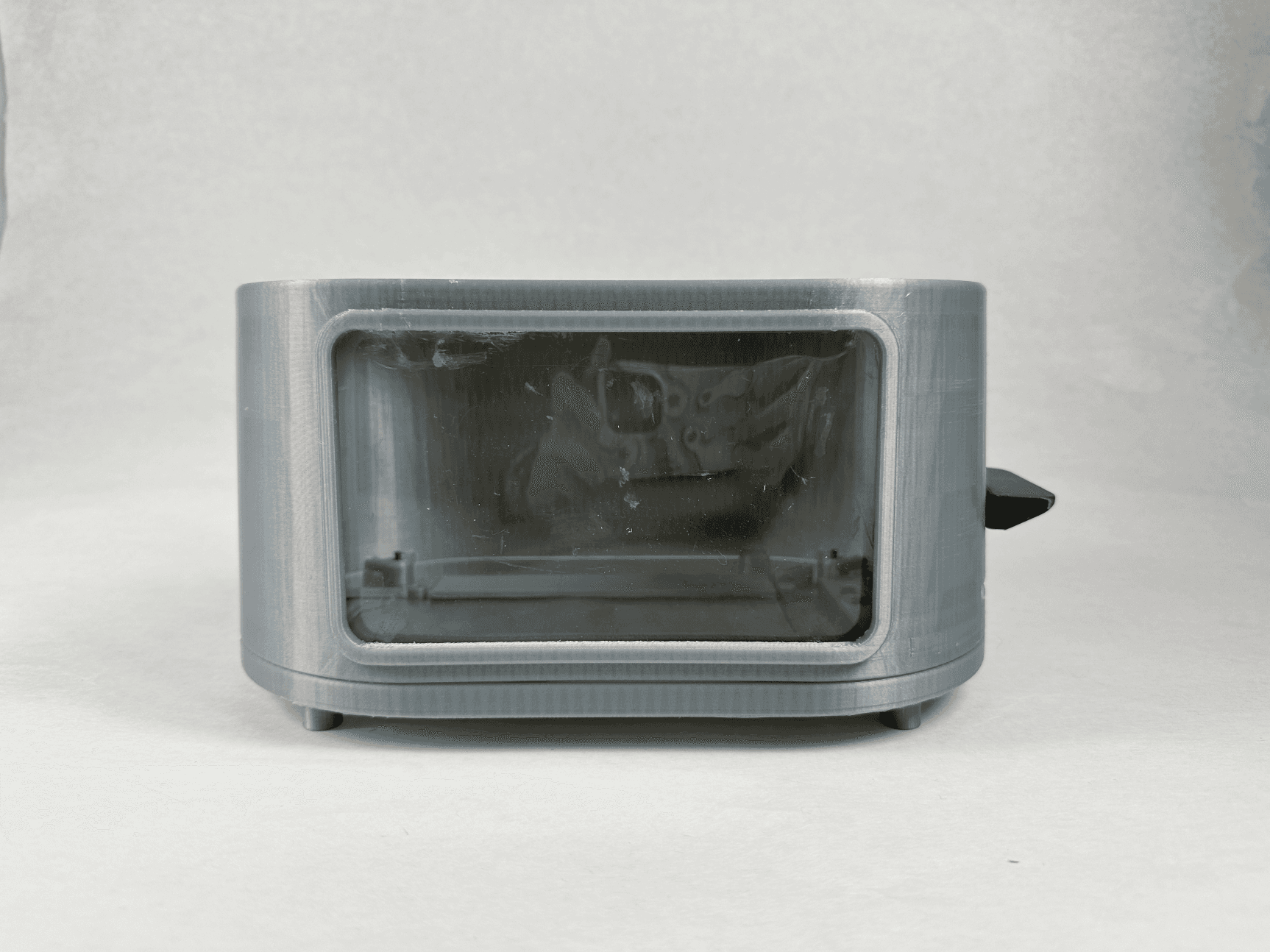
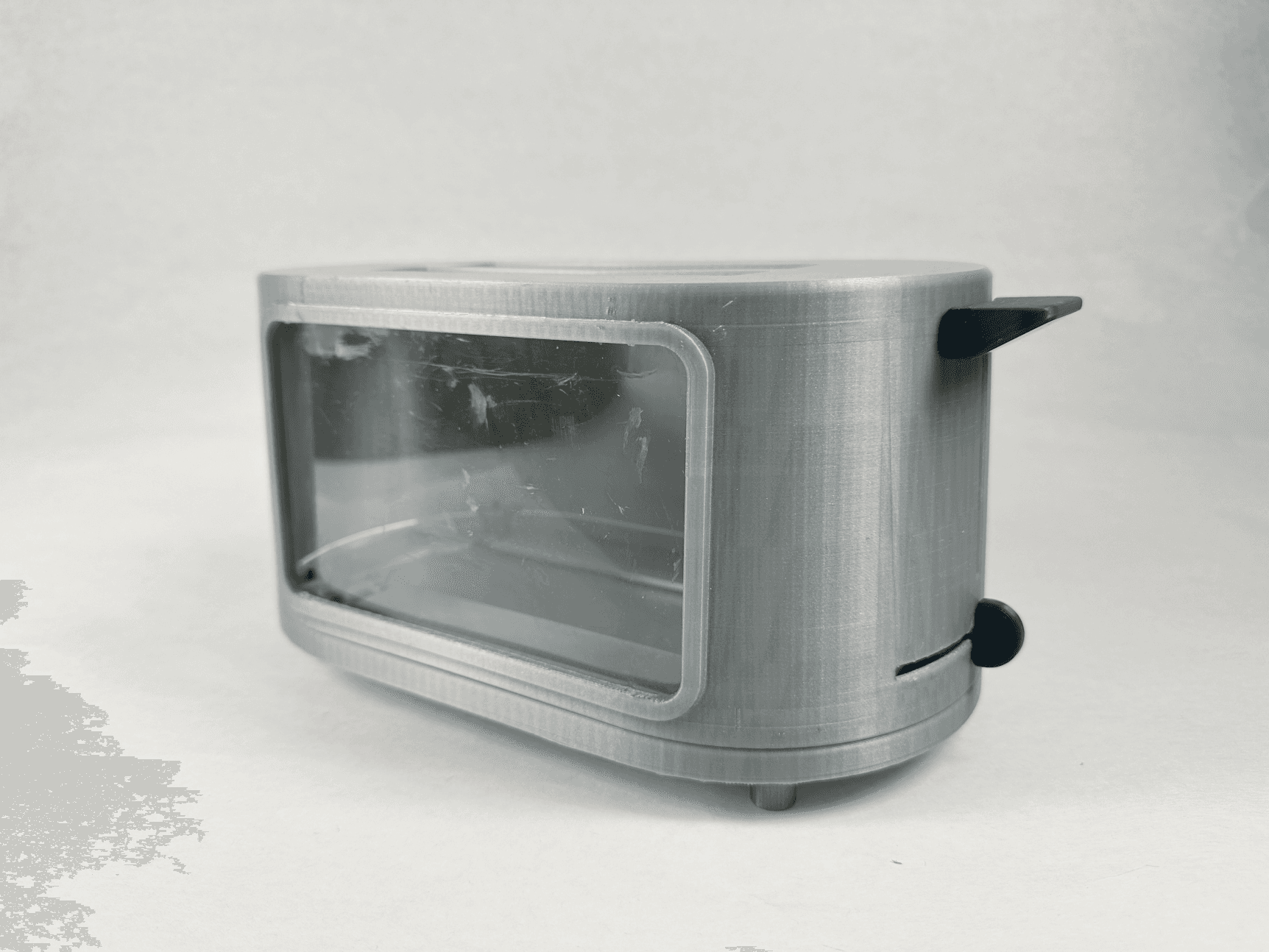
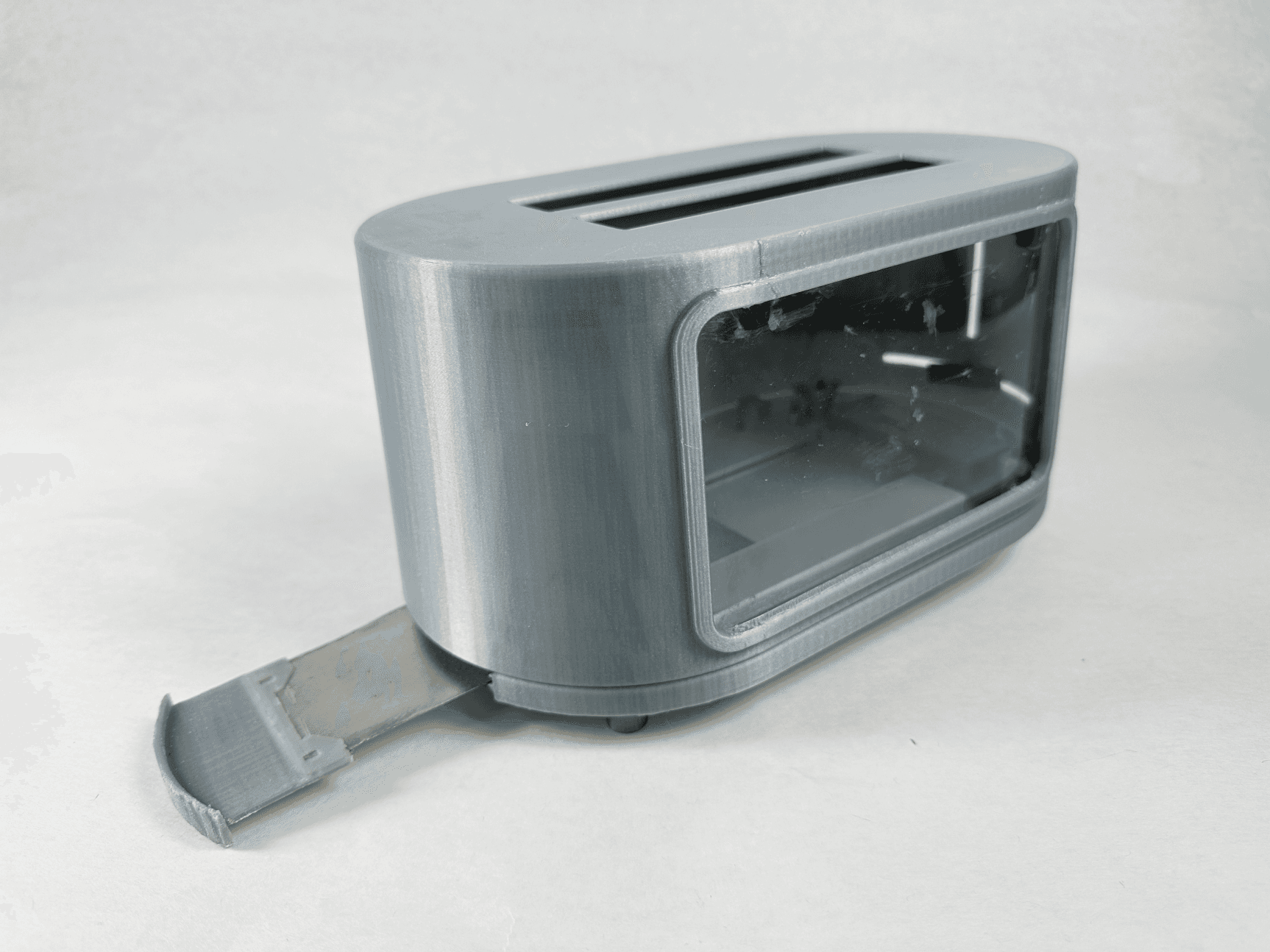
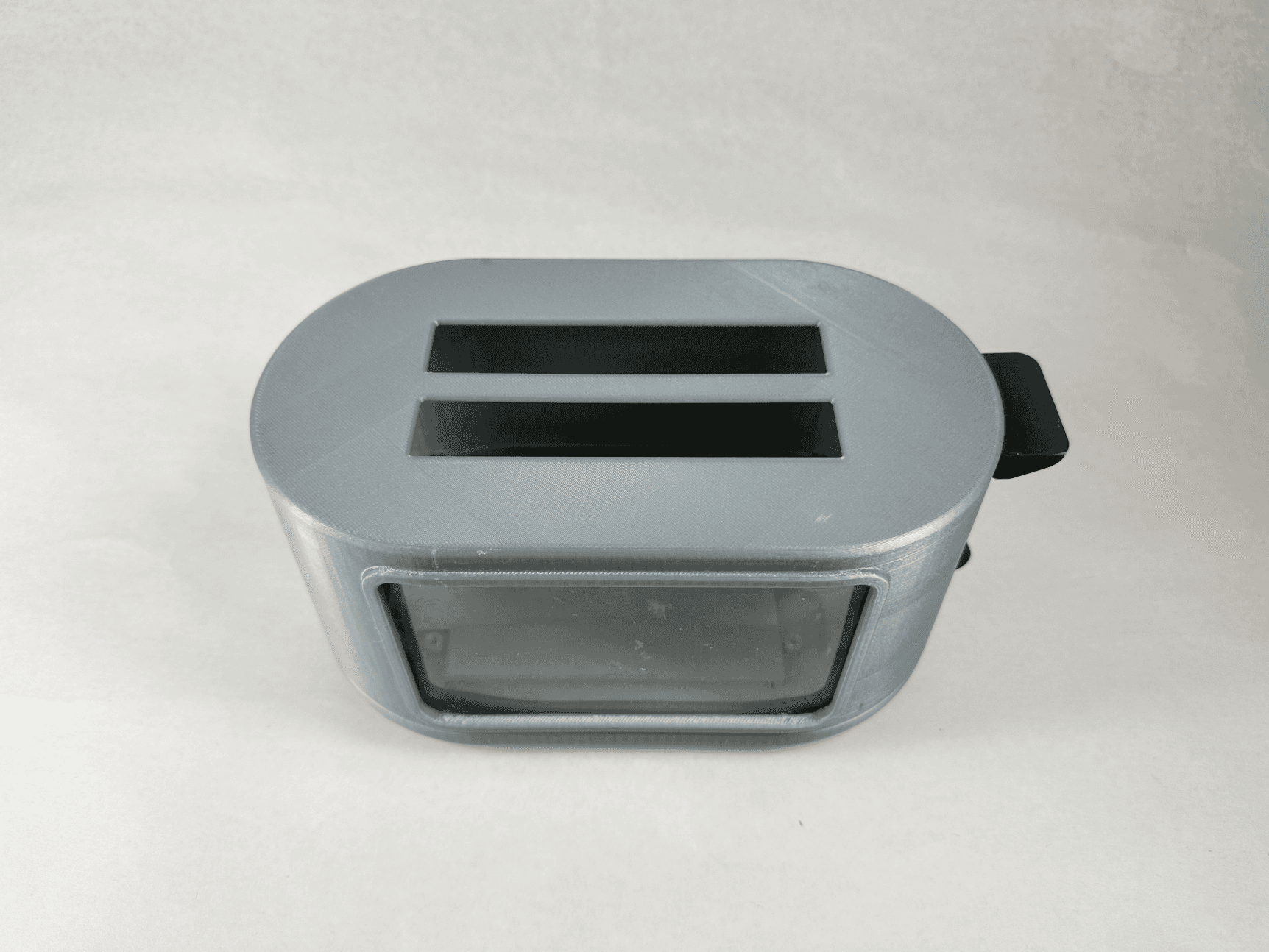
Clear toaster has a front viewing window that users can check the toasts and get the perfect toastiness they want.
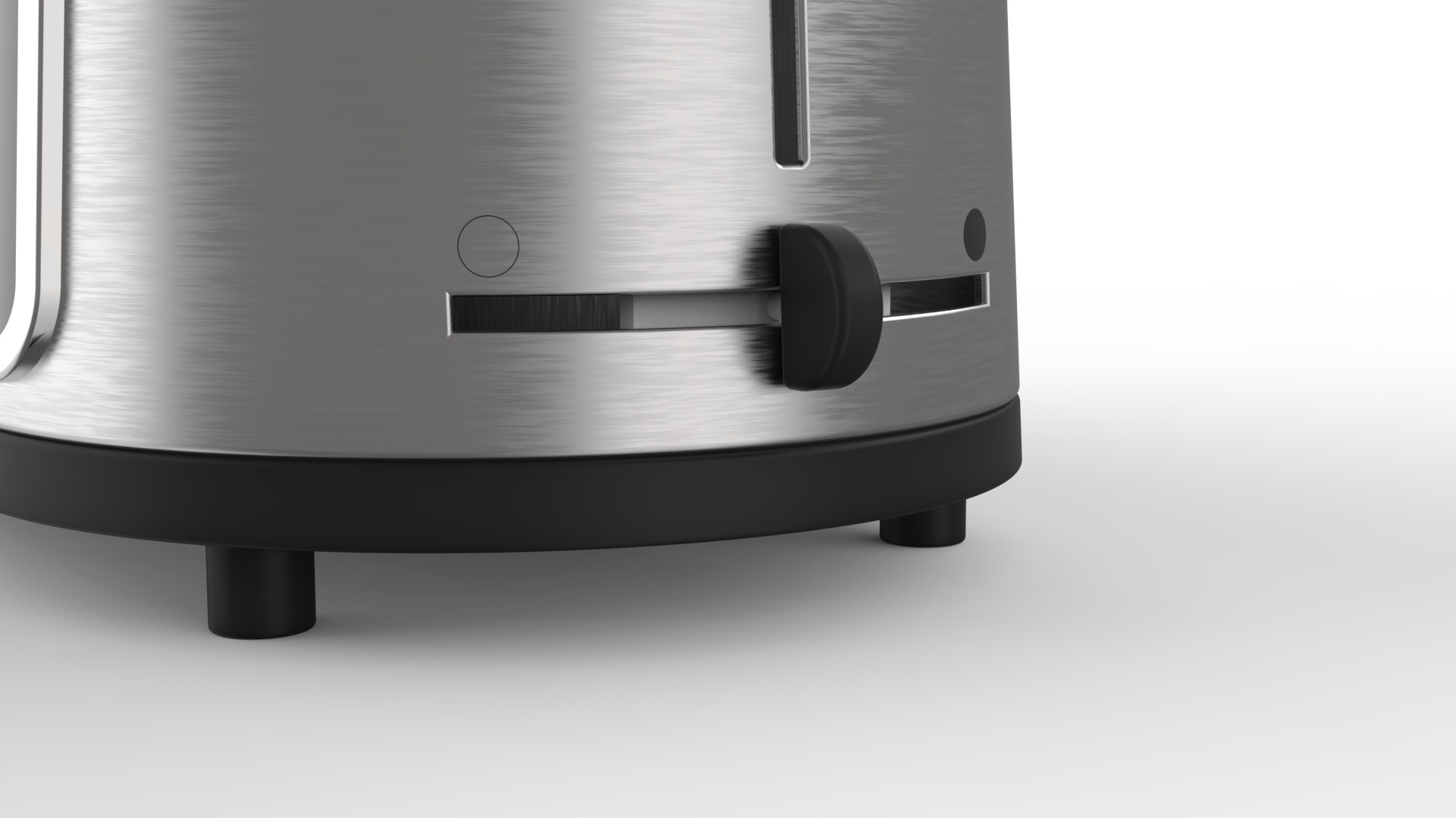
Clear toaster's intuitive UI allows the user to precisely adjust the toastiness.
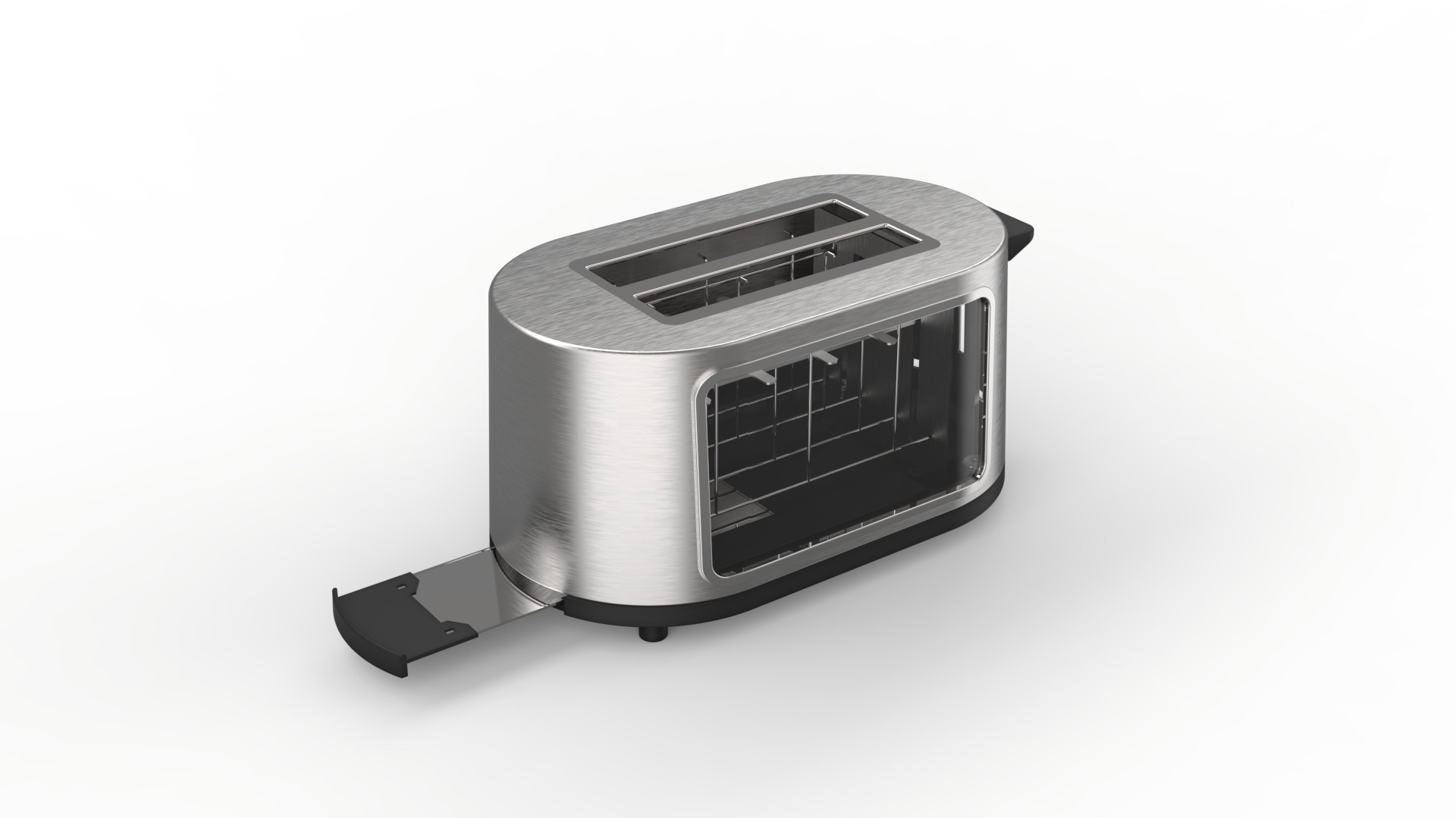
Clear toaster has a removable tray that users can easily clean after using and keep it lasting.
BACKGROUND
Problem
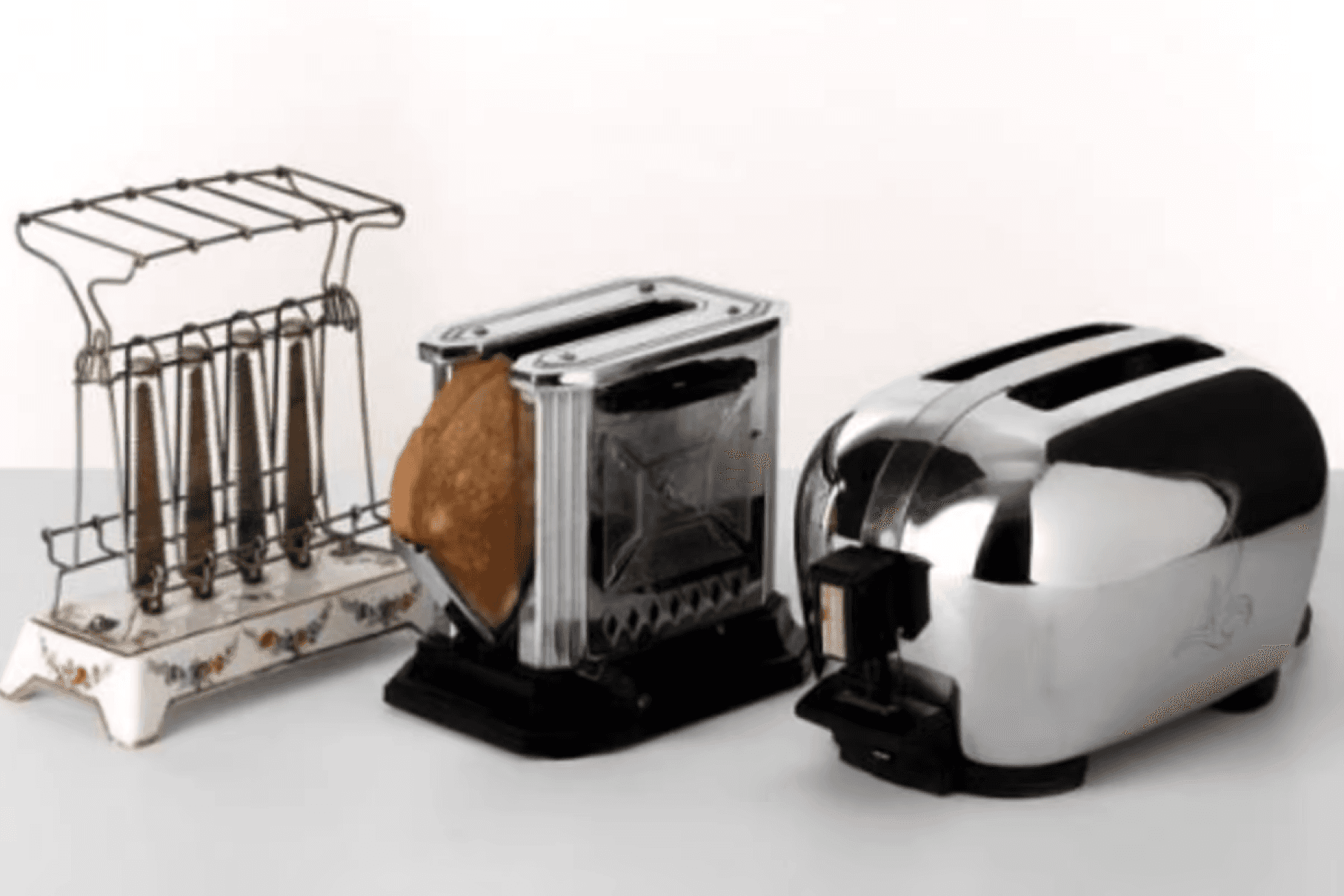
Evolution of toaster
Since 1919, users have been struggling to achieve the expected amount of browning on toast. Perfection in terms of browning has proved to be an elusive goal. Ironically, this same struggle has been the spark for the improvement of toaster technology.
What do people think about existing toasters?
To define the current problems of toaster, we conducted the initial research stages and gathered the insights.
First of all, we conducted the in-depth interviews that focused on discovering people’s preferences and thoughts on the durability of the toaster.
Based on the interview, we generated the data and transferred them into numerical charts.
Interview questions
How often do you make toast?
Have you ever had to replace your toaster
What types of material of toaster do you prefer?
How much value would you place on longevity/durability in a toaster?
What do you toast most often?
Did you choose your toaster or did someone else?
If you didn’t were there any features you would have preferred?
How often do you clean your toaster?
How long have you had your toaster?
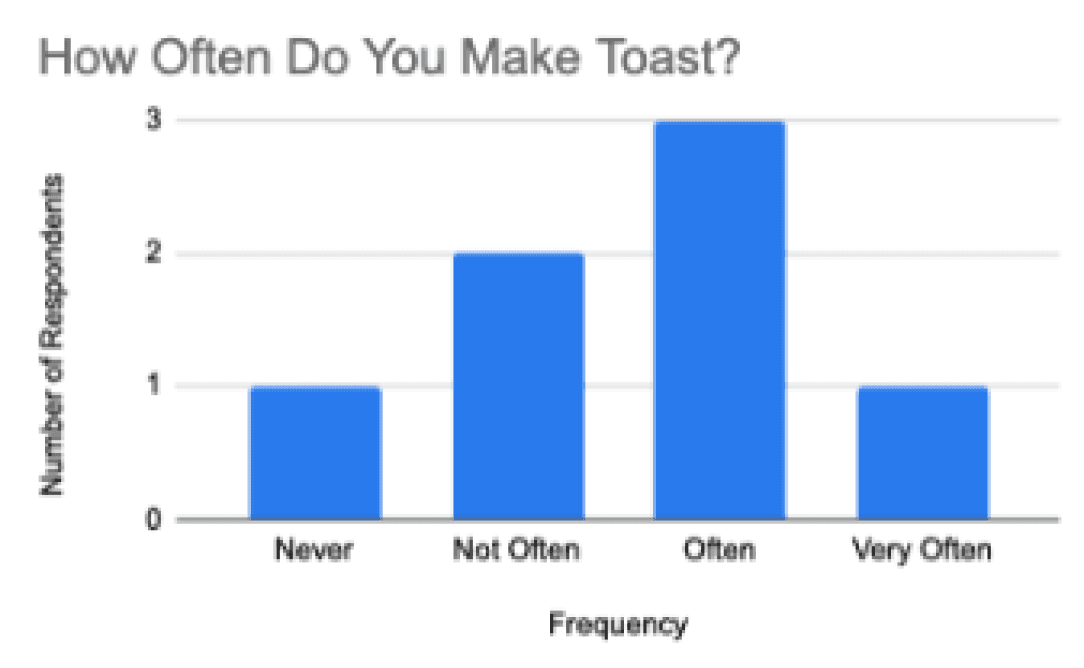
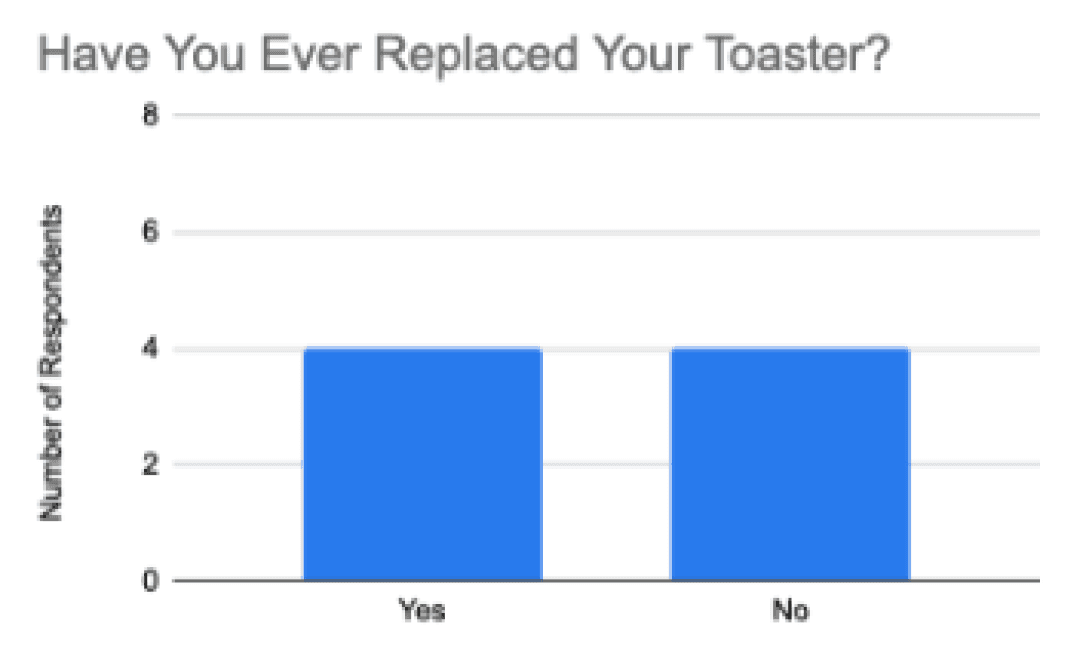
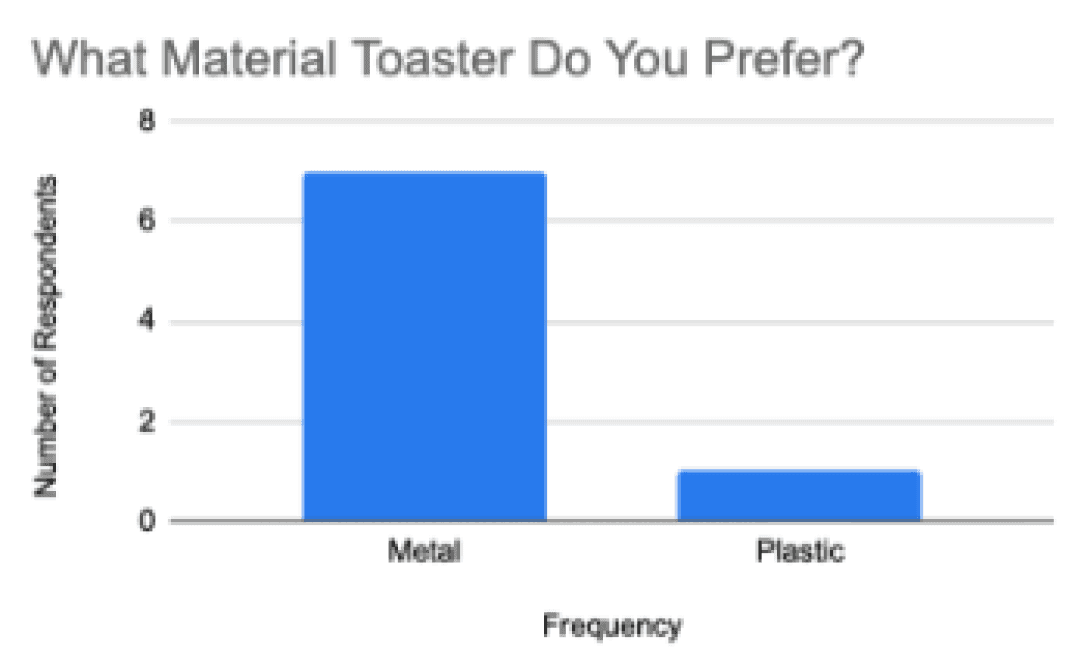
The team gathered two main insights related to the toaster.
1. People highly value the durability of the toaster.
2. People rarely clean their toasters even though they highly value the toasters.
RESEARCH
Let's test the existing toaster with the users.
Based on the initial interview, team conducted the user testing with the toaster to define the user journey and gather opinions about the function of the toaster in the market.
The team provided a brief introduction about the testing and a short instruction, “Make a toasted bread by using a toaster.”
Through this stage, the team discovered two main problems with the toaster:
1,. The setting number on the knob is obscure which can create unsatisfied results
2. Toaster makes uneven toast.
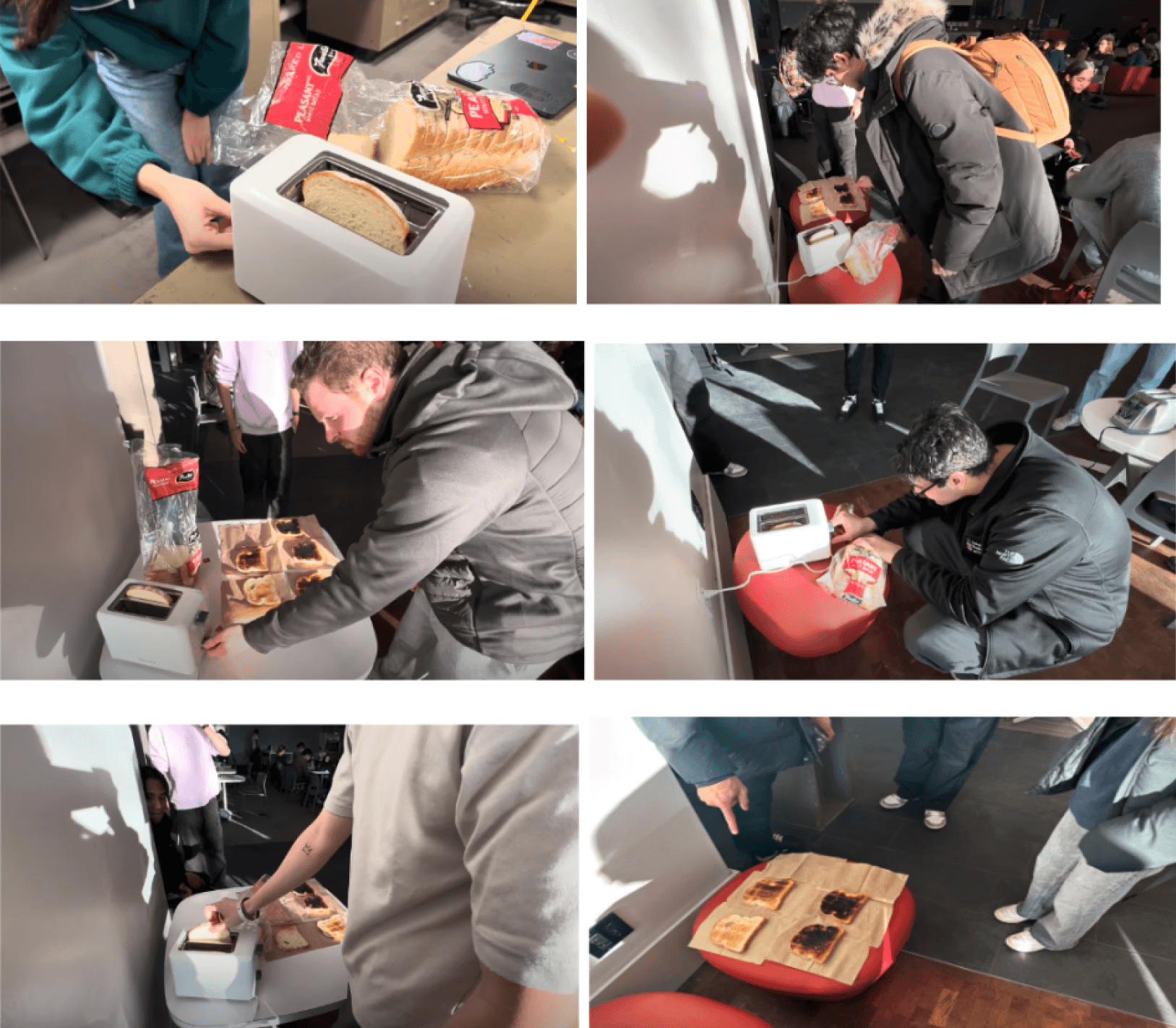
Does existing toaster provide the best toast to users?
Toastiness Guessing Experiment
Based on the results from user testing and interviews, the team conducted an experiment called the “Toastiness Guessing Experiment.”
The main purpose of this experiment is to prove the connection between the unclear setting and the results of the bread. Also, this experiment is expected to gather people’s feelings and opinions about the gap between the setting of the toaster and unexpected results.
During the experiment, people are asked to guess the level of the setting of each bread. After guessing one side, the bread is flipped over whether their guess changed or not based on the difference between the amount of toast in each side of bread.
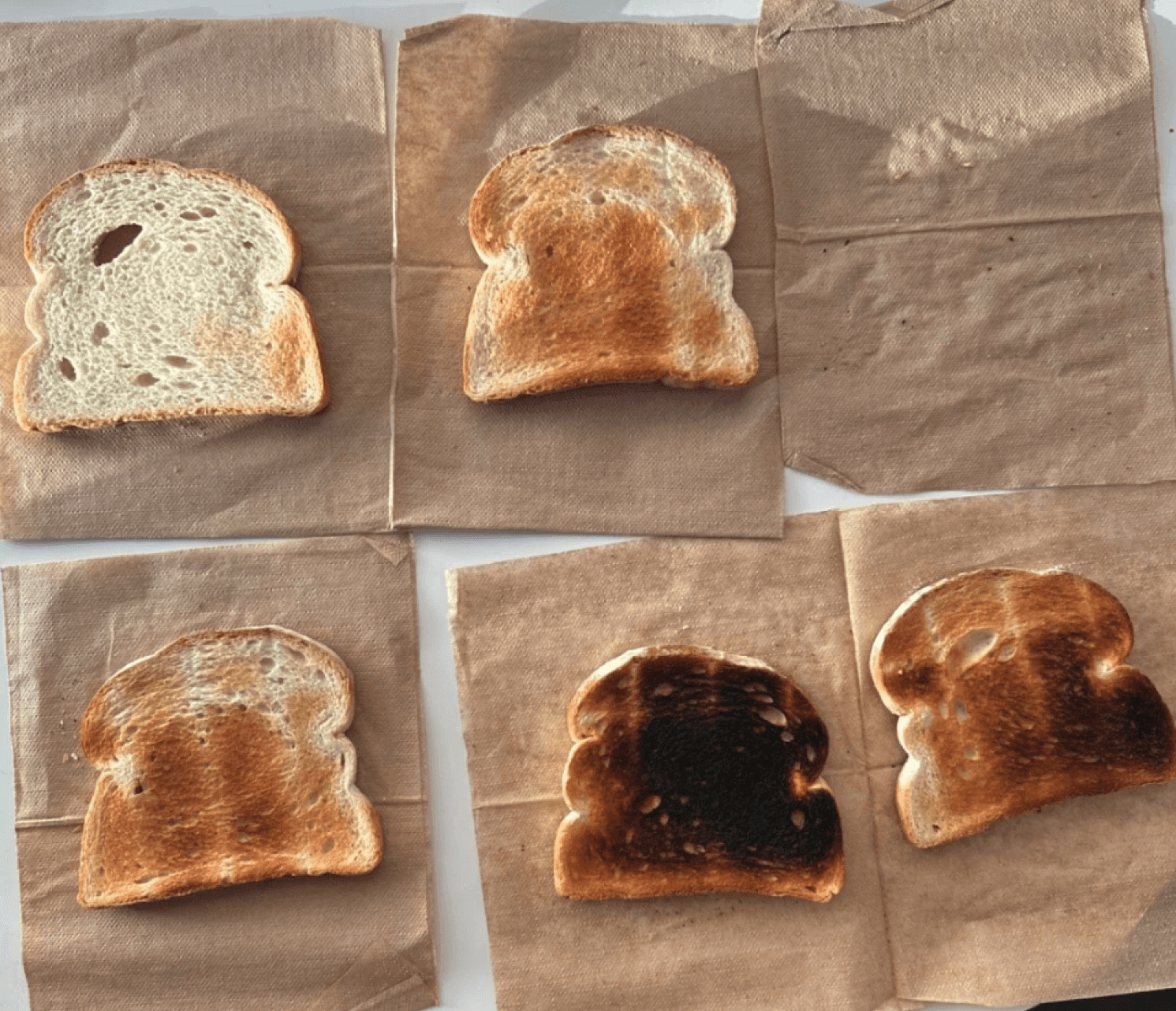
Insights
The Toastiness Guessing Experiment provides two main insights.
1. There is a gap between the actual level of setting and the actual toasted bread.
2. All of the participants were surprised by how unevenly toasted and unsatisfied with the toaster’s function.
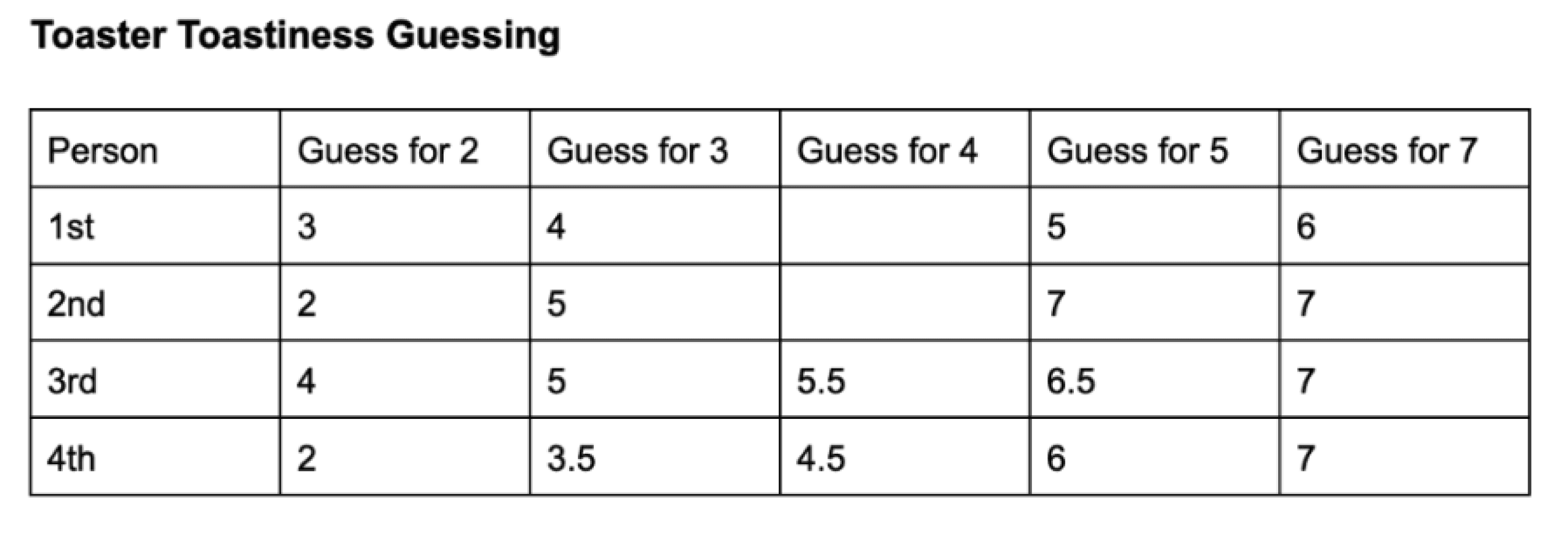
Affinity mapping
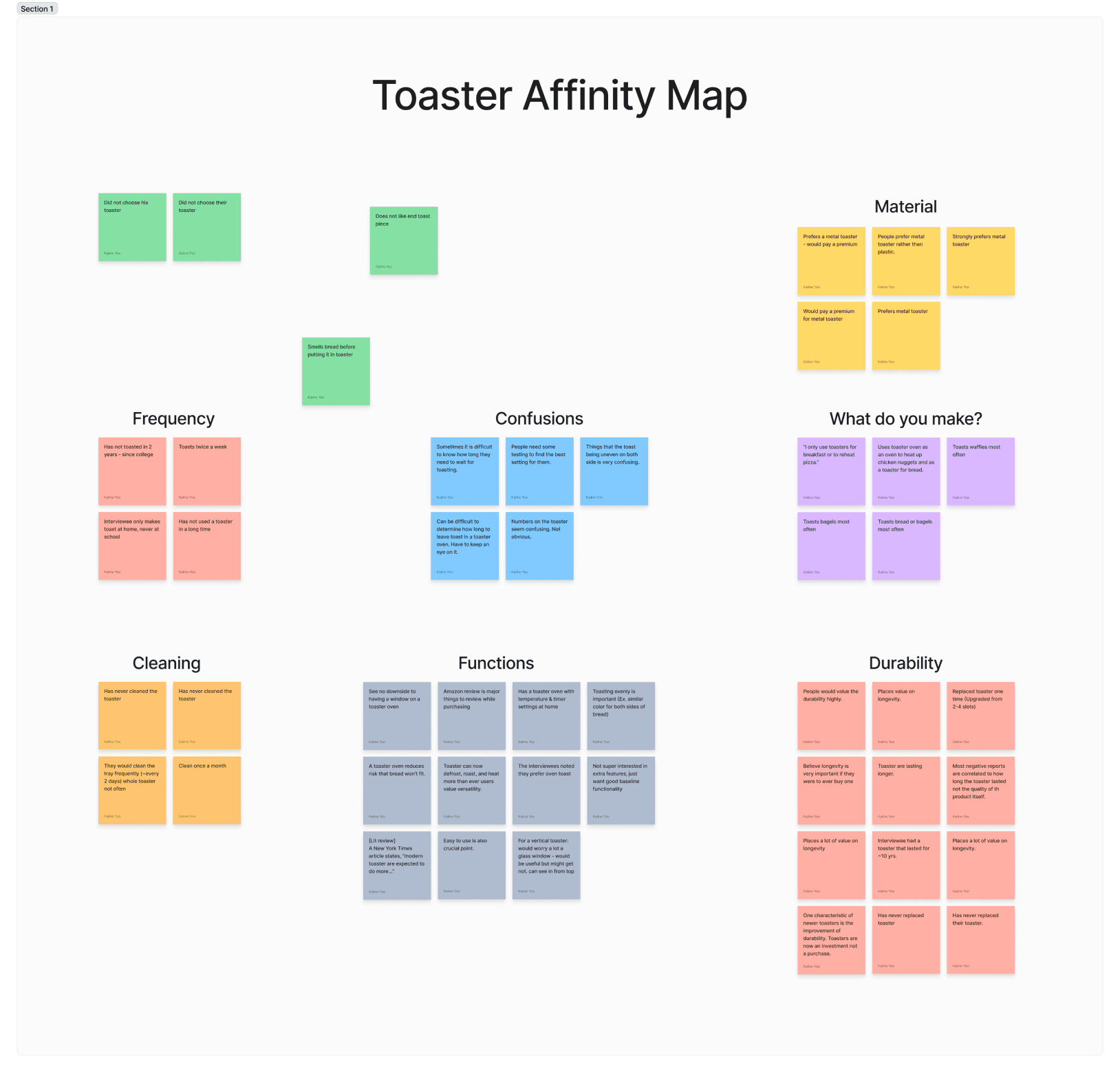
Based on the testing, interviews, and experiment, the toaster affinity map includes seven different categories: frequency, confusion, material, types of toast, cleaning, functions, and durability.
Each of these categories includes the key quotes from the interviews and thoughts from the participants. An affinity map helps the team understand the relationship between users and the product and current pain points.
Deeper understanding for user journey
User journey mapping allows the team to understand how the toasting experience is similar or different between the users. Also, it helps discover the pain points that users are currently facing. In this stage, the group focuses on creating the user journey mapping based on the interview.
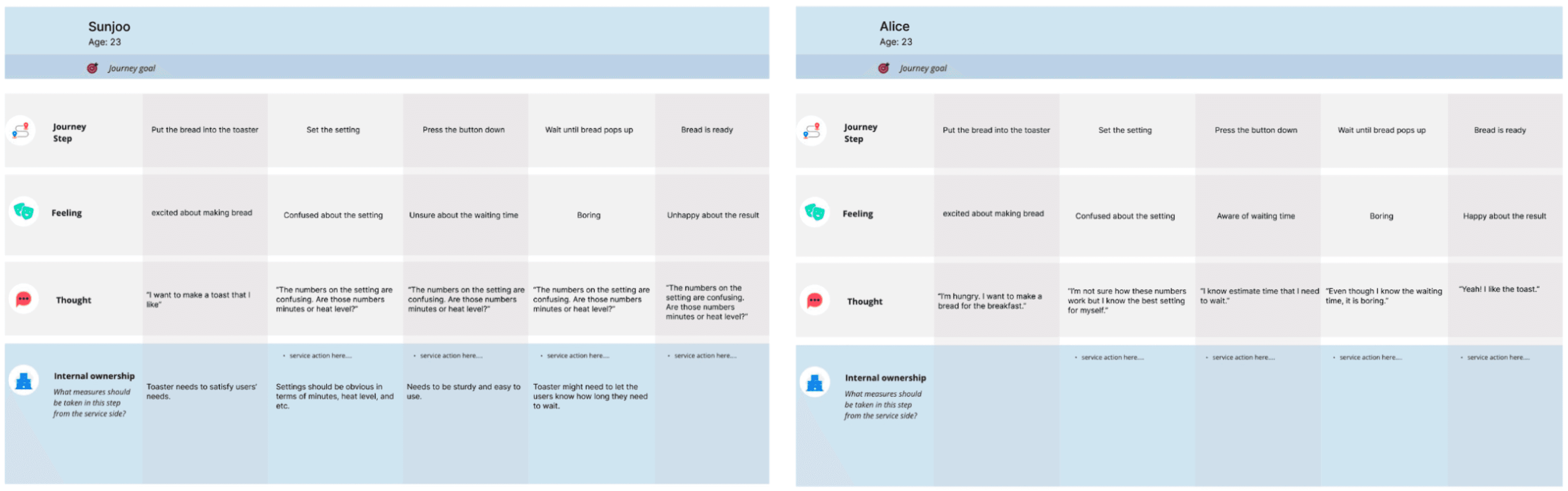
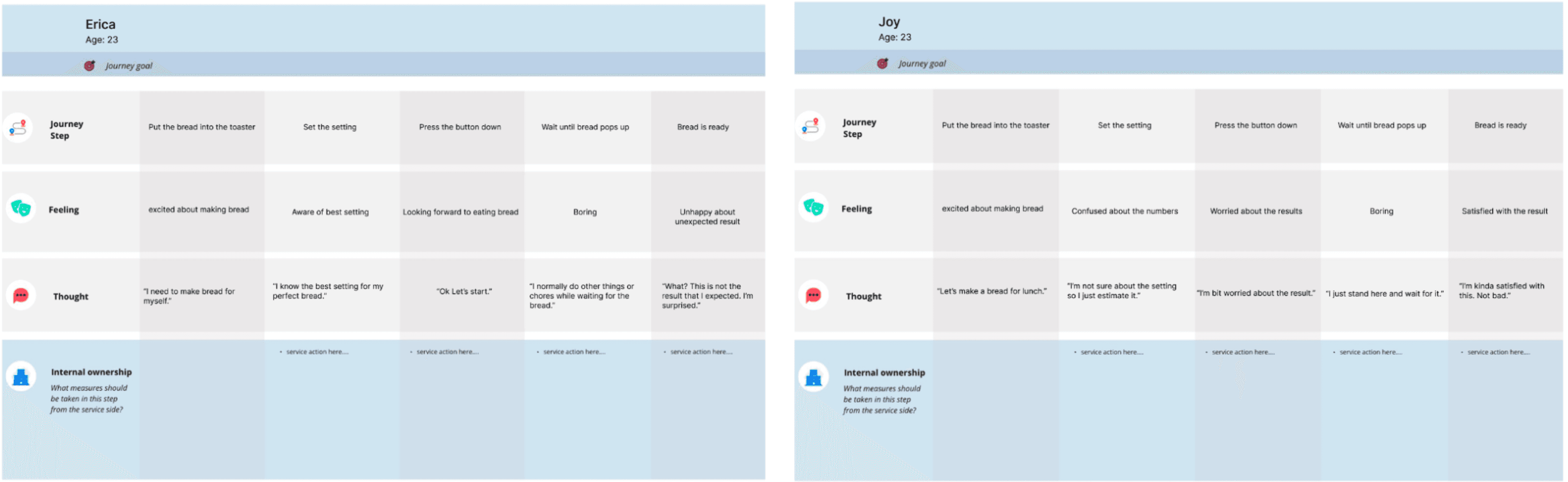
User journey told us three main critical points:
1. They feel they need clarification about the setting of the toaster.
2. The unclear instructions lead to a feeling of boredom while they are waiting for the toaster.
3. The final result is not fully satisfactory.
Problem statement
Engineering considerations
Before the ideation stage, the team researched the engineering considerations such as human factors, manufacturing, and environmental considerations.
Human Factors
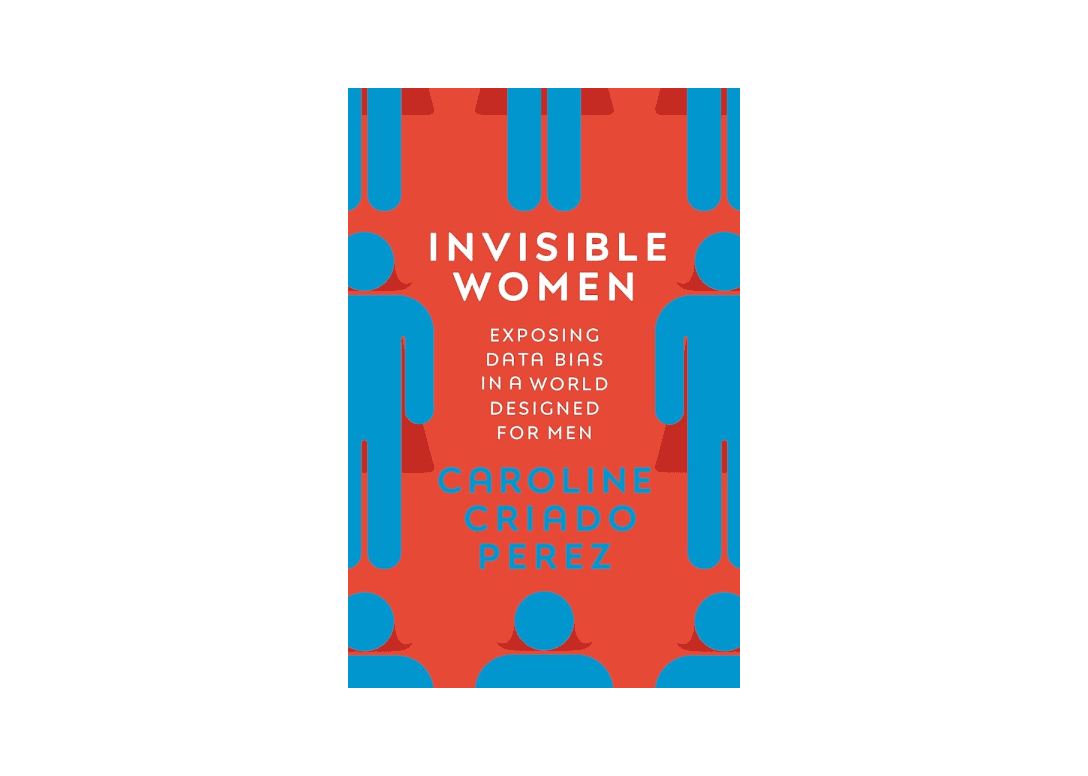
Invisible Women: Data Bias in a World Designed for Men
Must consider marginalized perspectives, particularly in research phase
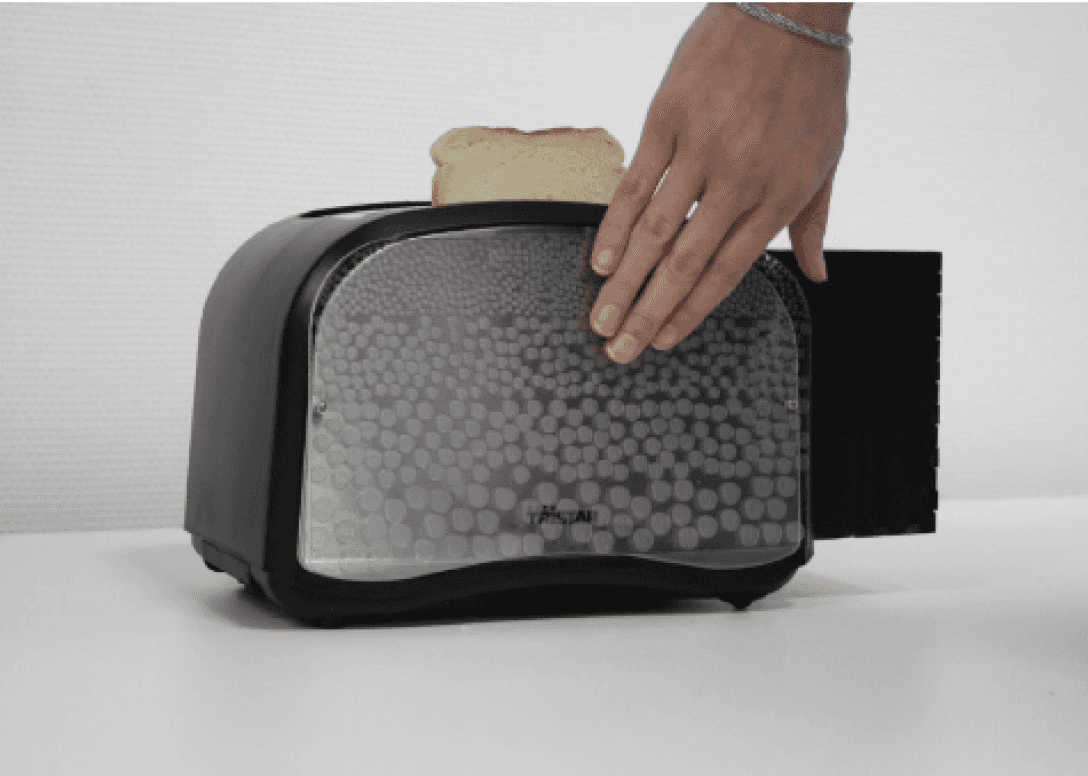
Feedforward Toaster: Design mapping for expressive use
User interface can be radically adapted to improve understanding & connection

Consumers’ Interpretation of the Statement: “Do not leave [insert product here] unattended”
User interface can be radically adapted to improve understanding & connection
Toaster Tear Down
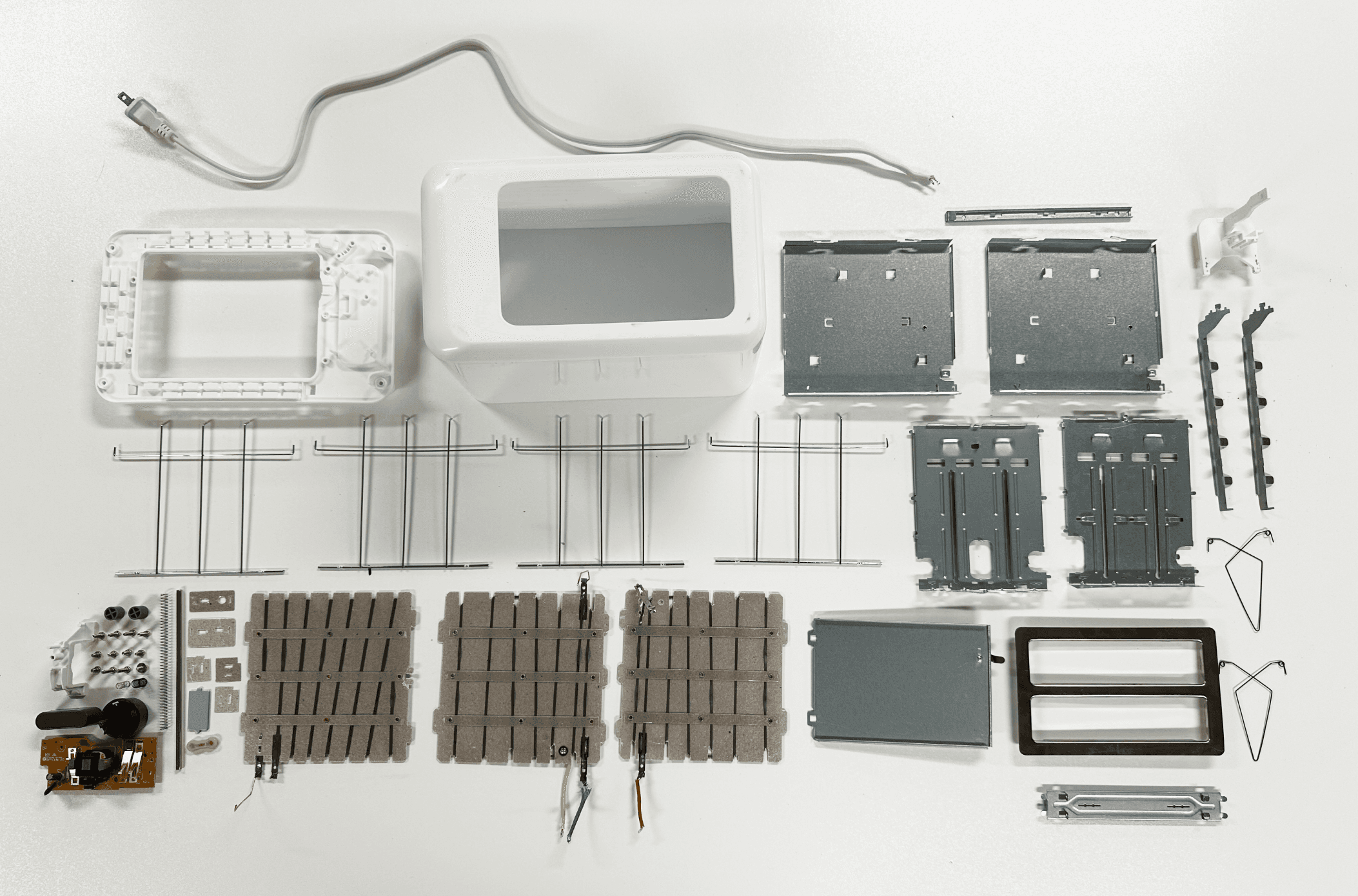
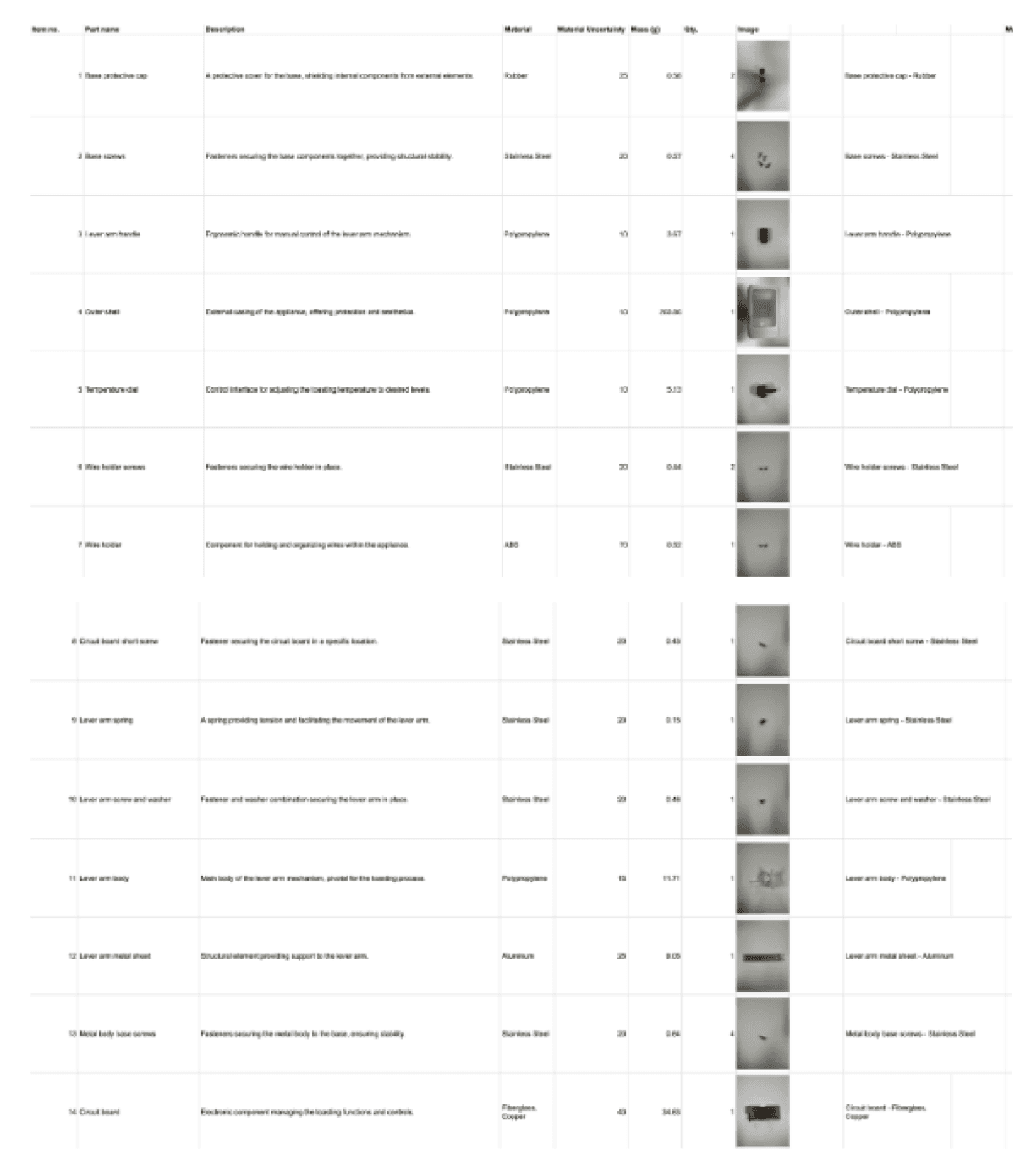
To understand the toaster in-depth, the team tore down the toaster and analyzed the basic structure and mechanism of the toaster. Simultaneously, team created Bill of Material (BOM).
Environmental Considerations
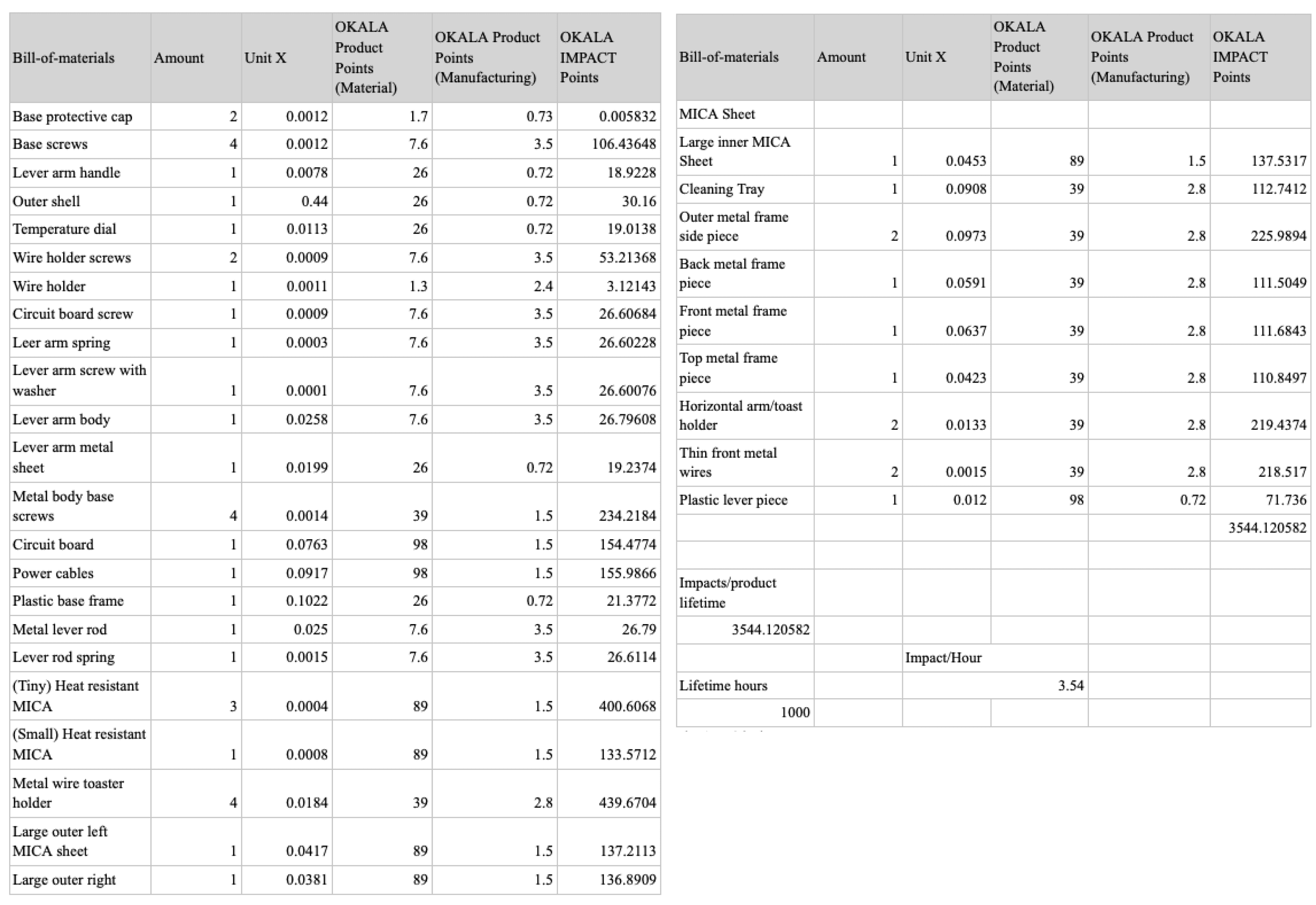
According to the BOM, 36 different components are used for the toaster. To understand how each component impacts the environment and human factors, the team referred to Okala Practitioner and Okala Impact Factors, which show calculations for materials and processes employed in hard products, architecture, softgoods, and electronic systems
Life Cycle Assessment (LCA)
To gauge the environmental impact of manufacturing the device, the team performed a Life Cycle Assessment (LCA) on the materials of a typical toaster.
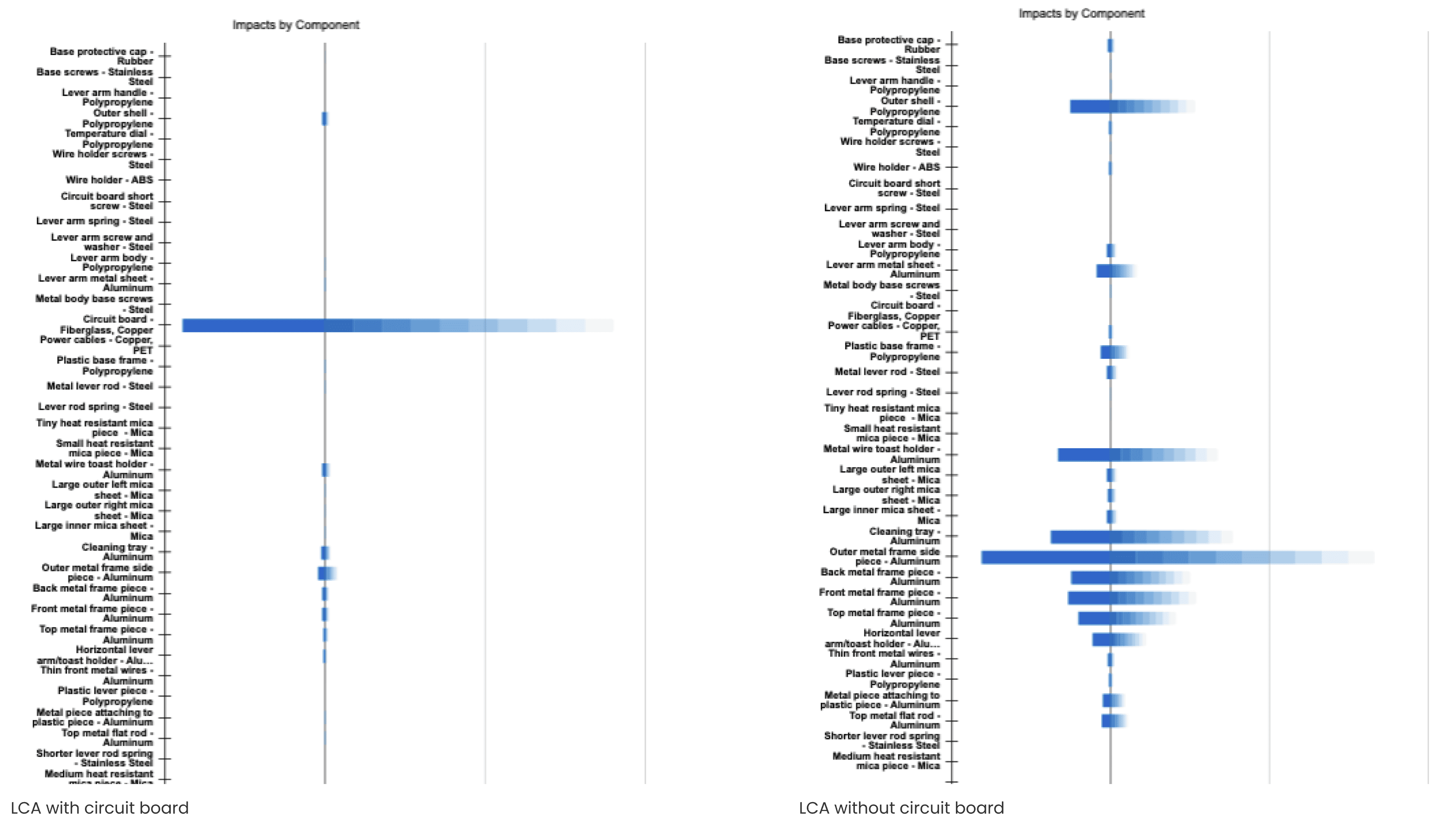
The two chart shows that beside the circuit board, aluminum is the material that has the second highest environmental impact. Therefore, the team decided to replace the aluminum with stainless steel, as it is more durable and sustainable.
Along with the features of stainless steel, aluminum has an estimated eco-intensity of 6.71 impacts/kg, while stainless steel’s is only 0.93 impacts/kg. Thus, changing aluminum to stainless steel will reduce the eco-intensity and total CO₂ from 11.4 kg CO₂ to 9.67 CO₂.
Design Requirements
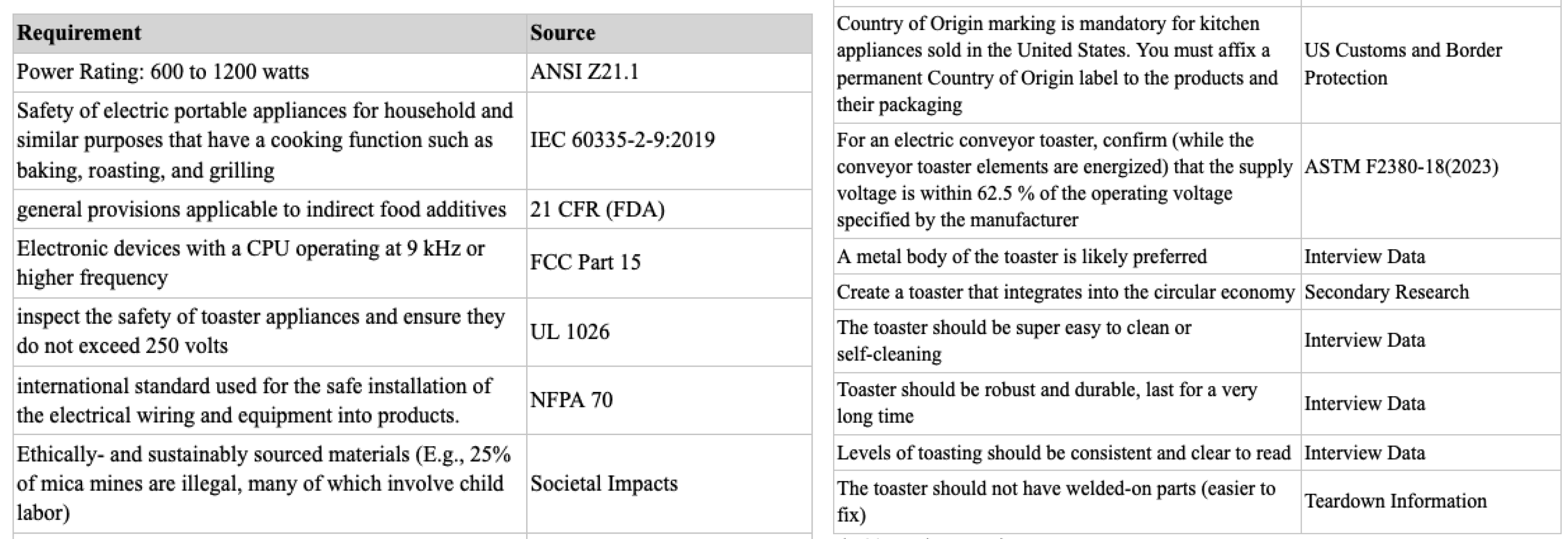
Before the design ideation stage, the team researched the standards and guidelines that could impact the final product. The team was referred by the American Society for Testing and Materials (ASTM), American National Standards Institute (ANSI), IEC, Federal Communications Commission (FCC), the National Fire Protection Association (NFPA), and the Code of Federal Regulations (CFR).
IDEATION
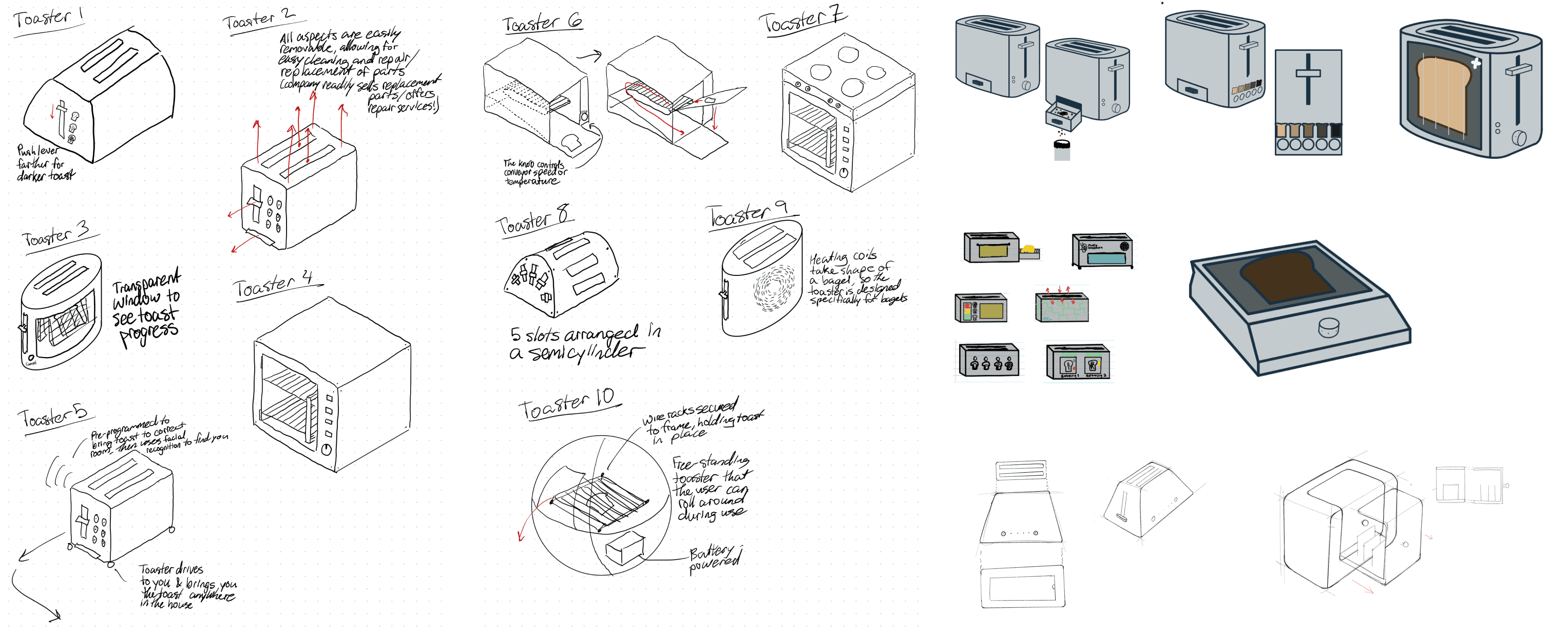
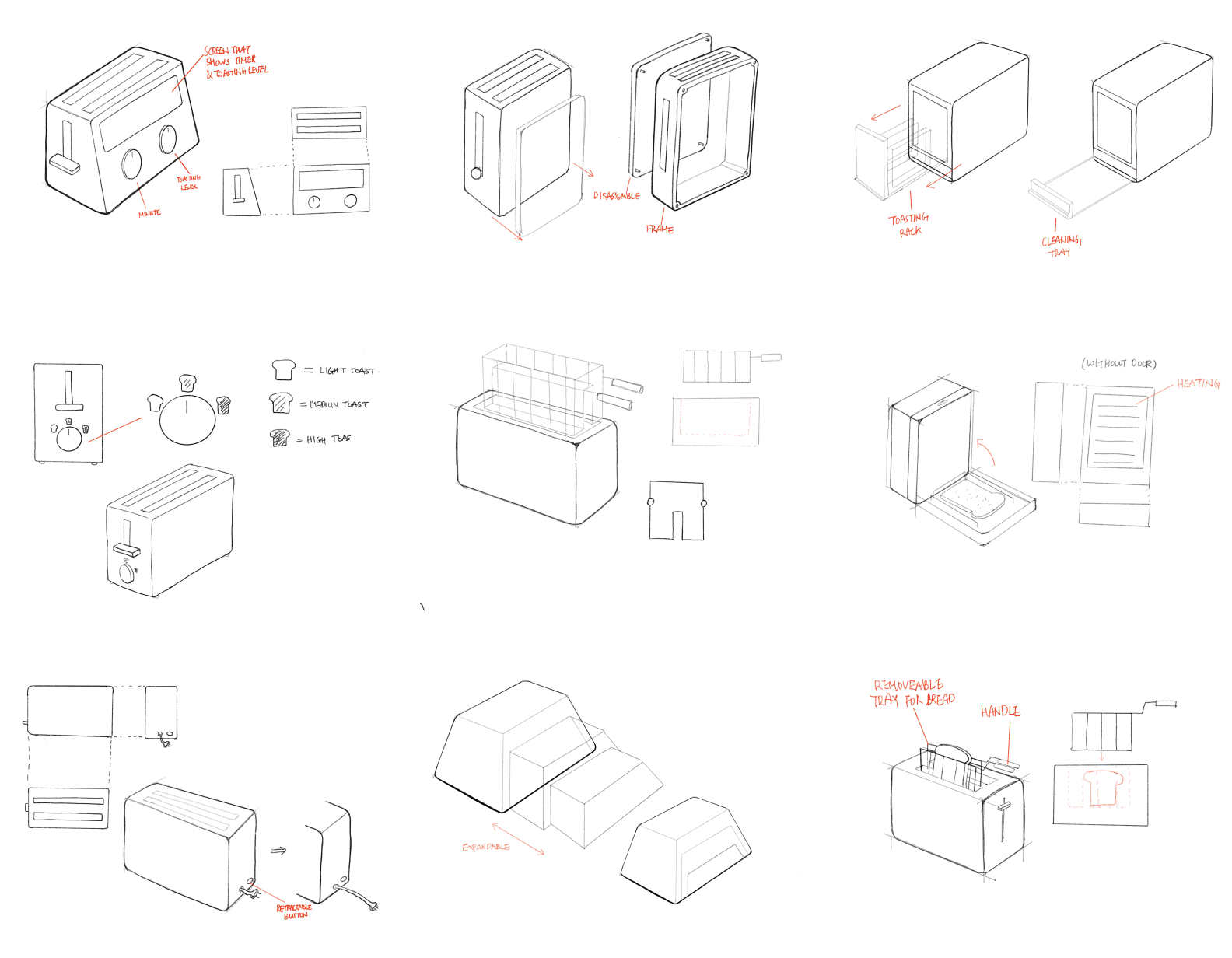
Sketch + Ideation
USER TESTING
Prototyping & User Testing
Based on the sketches, we made a physical prototype and tested it with the users to finalize the final features.
Prototyping I: General Form
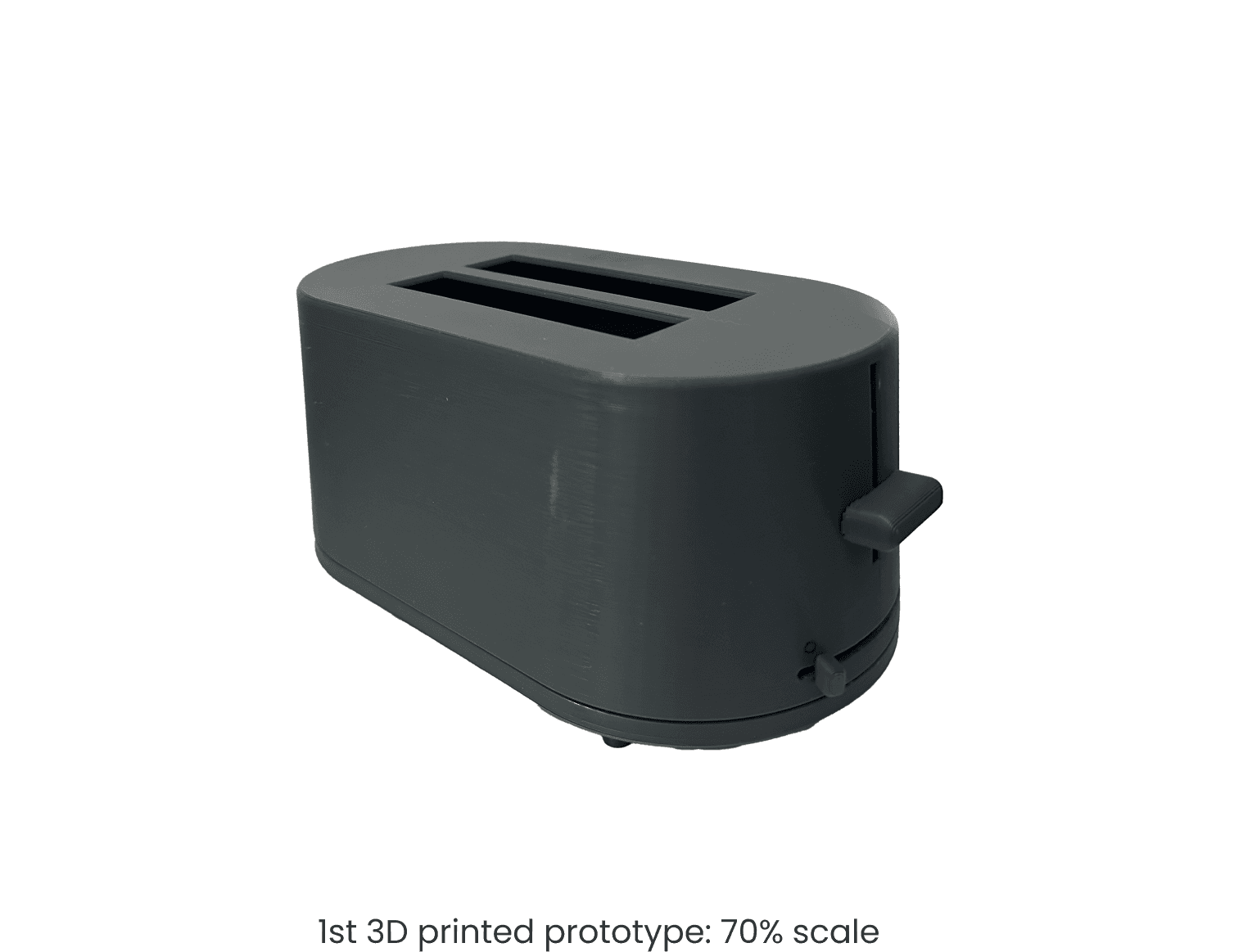
The goal of the first round prototype is to determine the overall structure of the toaster. It provides a good foundation for the design, after which more specific considerations could be addressed. Also, the team set the goal of making the connection between the form and the durability of the toaster.
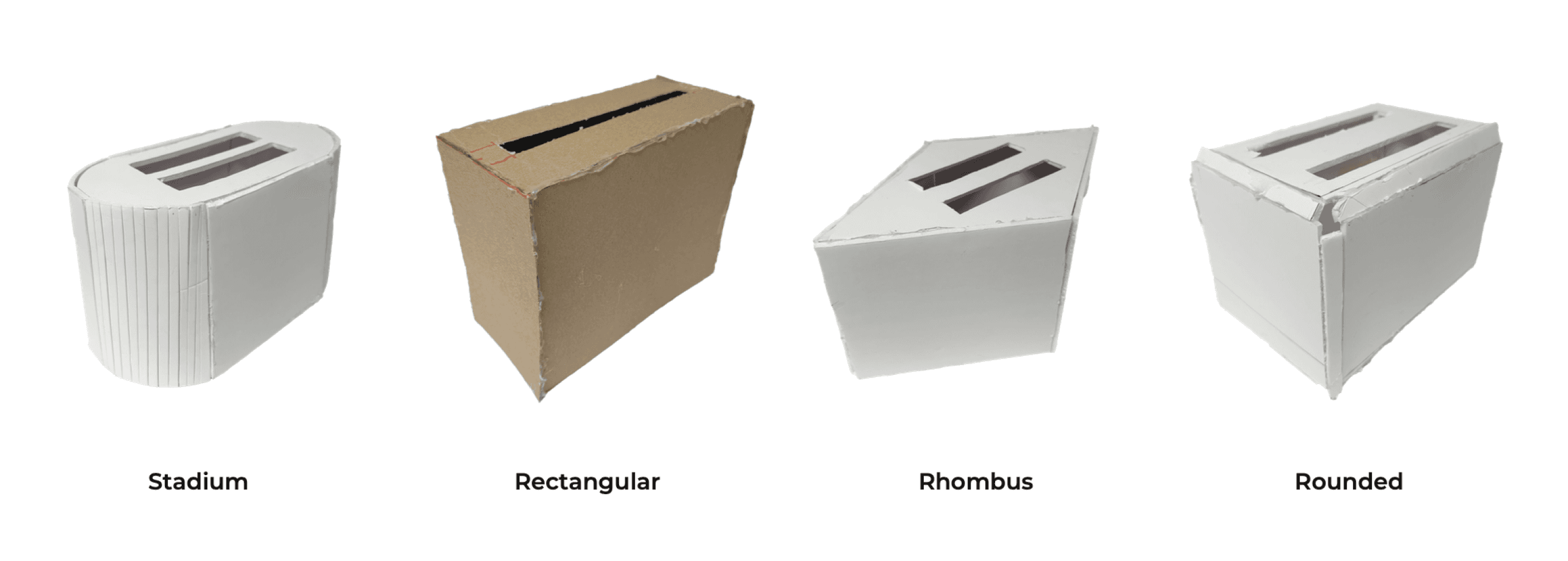
User Testing I: General Form
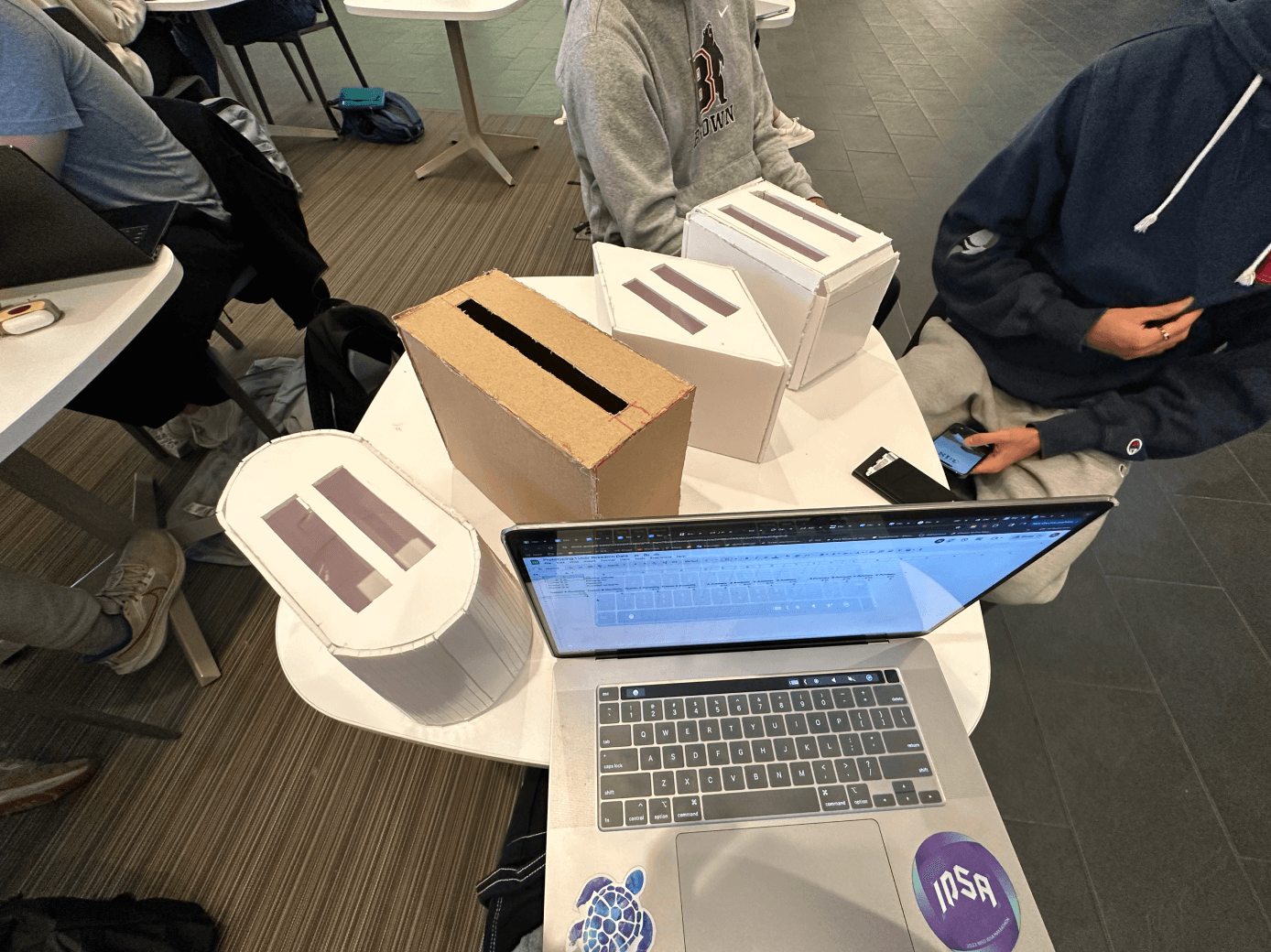
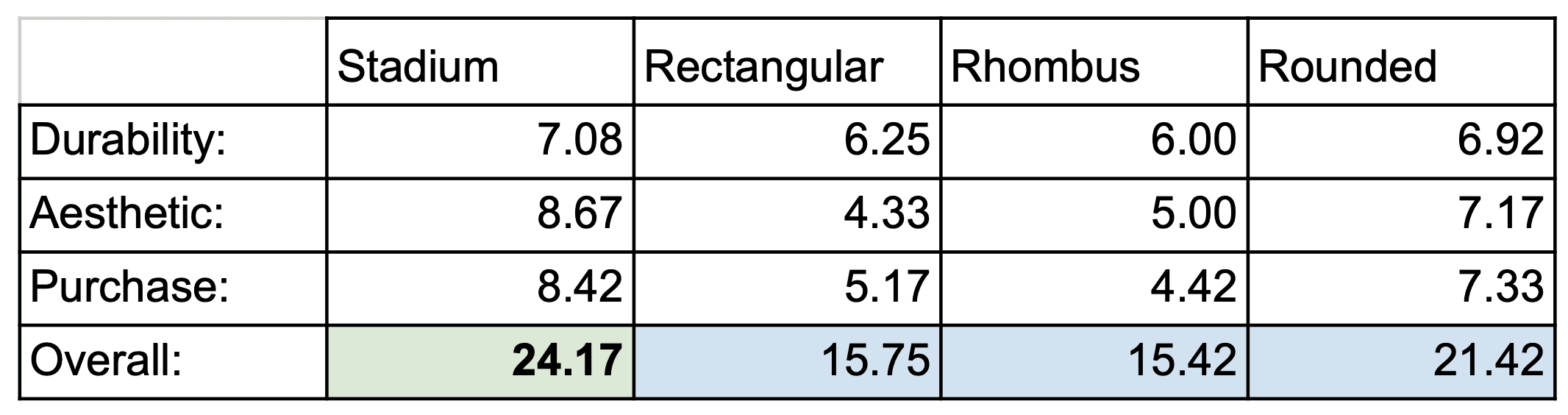
With prototypes, the team presented them to survey participants. The team asked them to rate the toasters based on durability, aesthetics, and likelihood of purchasing them, only depending on the forms.
Through the survey, the team collected numerical data in a spreadsheet and aggregated it to determine the overall preferred design. As a result, the stadium toaster had the highest overall rating.
Prototyping II: User Interface
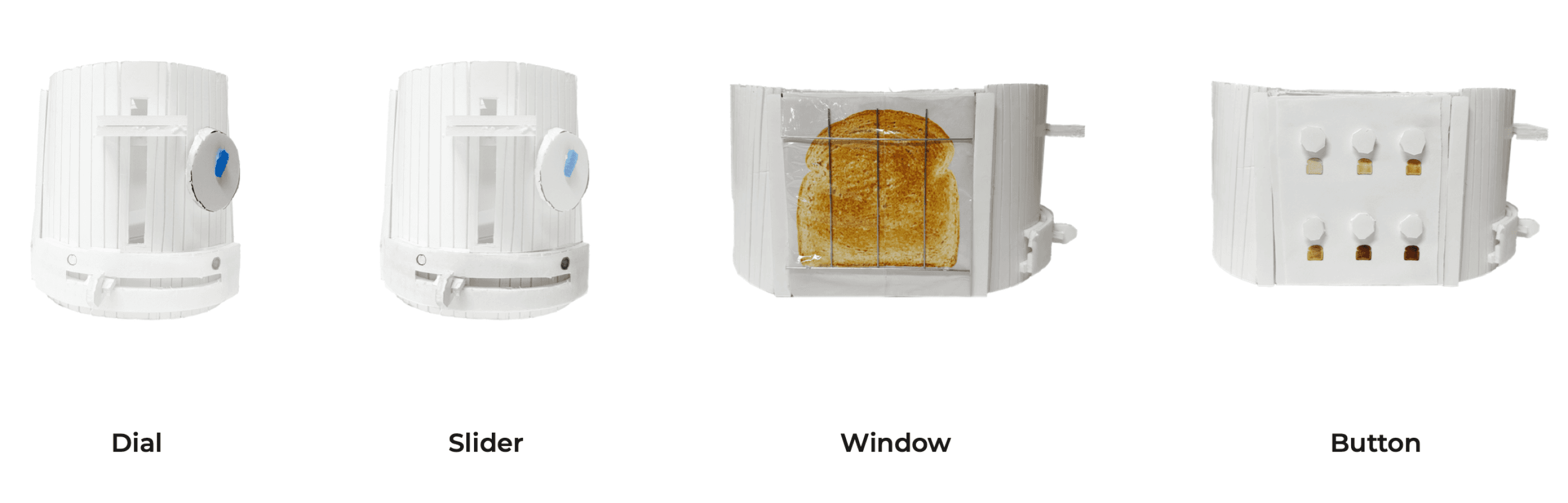
The next round of prototyping is centered on the user interface, the part of the toaster that allows the user to customize the piece of toast they are creating. For options, the team built four different UI prototypes.
User Testing II: User Interface
For the second round of user testing, the testing method was similar, but it involved more qualitative data.
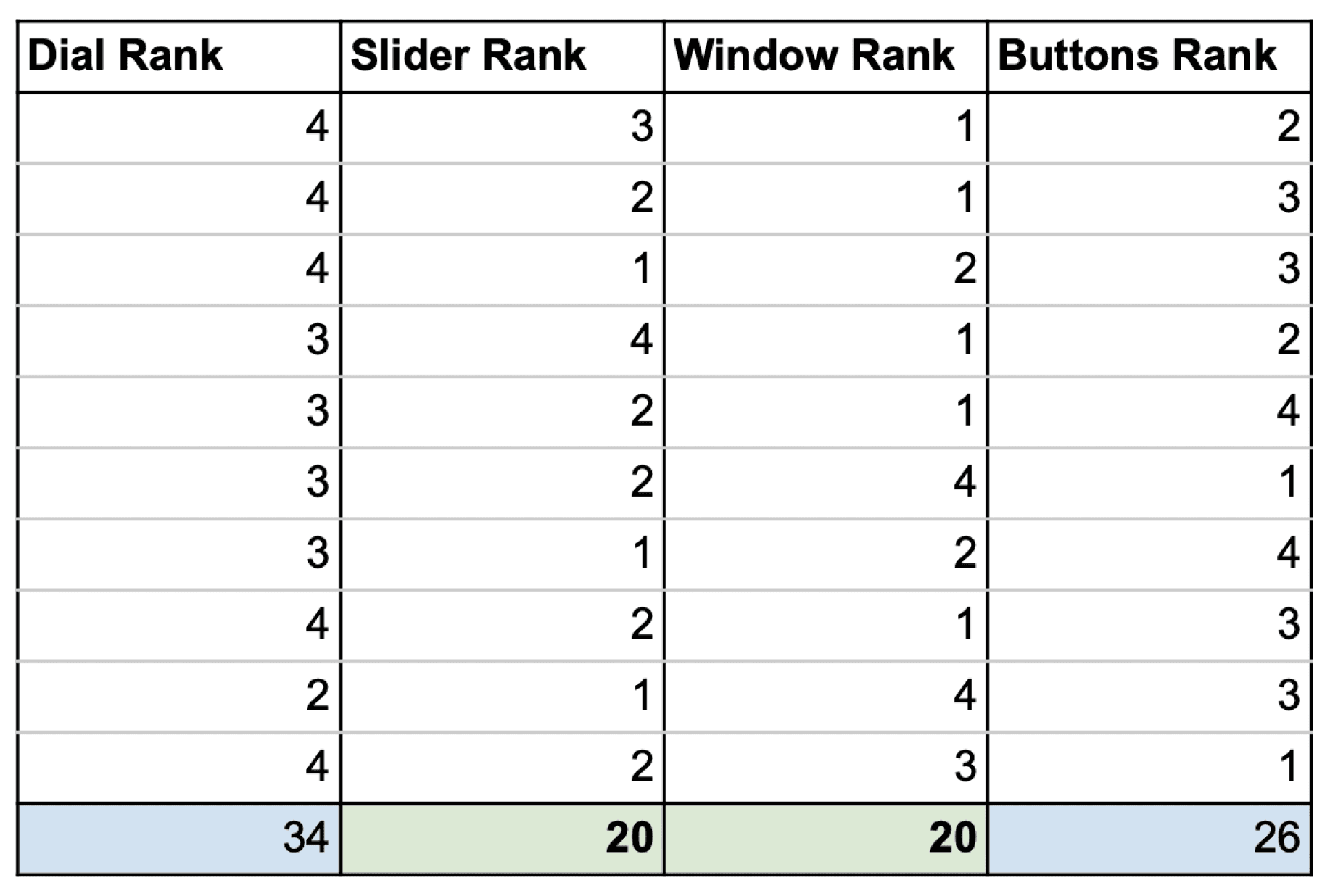
The participants were asked if each of the interfaces was confusing and what pros and cons they could see. They were also asked to rank each toaster from 1~4 on how confident they would feel in producing their ideal slice of toast with each interface design. 1 was the best in this ranking system which means lower numbers correspond to a more preferable design.
As a result, the slider and the viewing window both received the best rating.
Prototyping III: Fidelity and Repairablilty
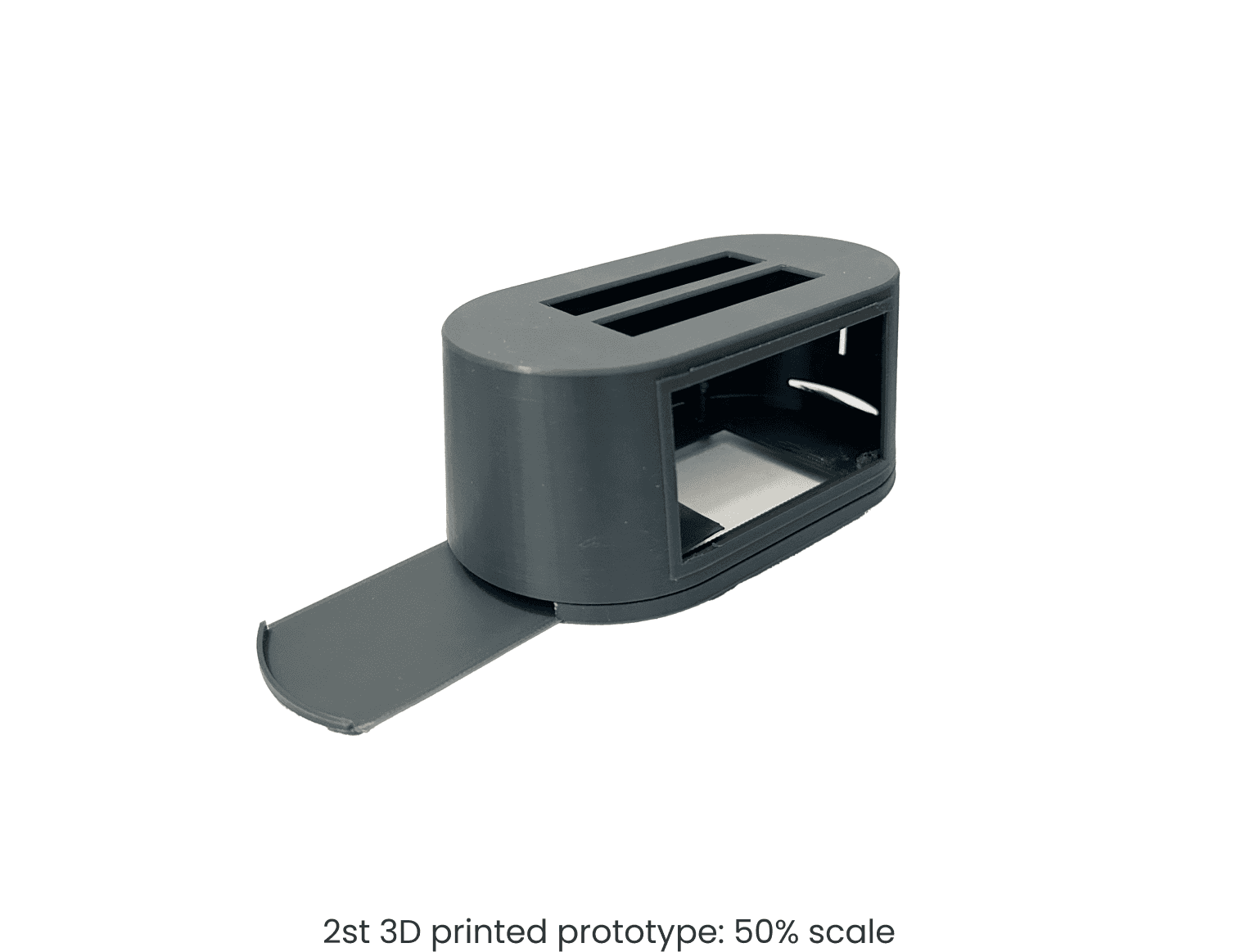
The last round of prototyping mainly focused on improving fidelity and repairability. The team’s goal was to design an easier assembly based on manufacturability and fidelity. Therefore, the assembly of the toaster follows a similar assembly method to a typical toaster. This prototype mainly followed the assembly of the toaster that was used in the previous tearing-down stage.
Finalized Design Features
Based on three rounds of prototyping and user testing, the team finalized the design and the features for the final toaster.
FINAL PRODUCT
Final model
The full-scale model was made of 3D printed PLA Plastic and PETG sheet. For assembly, four 5-32 Allen Bolt screws were used for the assembly of the body. The cut tin plate piece was used for the tray.
TAKEAWAYS
Importance of engineering consideration in design
This project was my first project that involved working with engineers. By learning basic design engineering and how engineering considerations can affect the design. Through this project, it makes me consider the engineering considerations while designing products and their environmental impact. Furthermore, it was a motivation for me to pursue my studies in design engineering.
Importance of user interviews and testing
At the beginning of the project, we never thought that people have various opinions about the normal toasters because a toaster is a product with a simple function and purpose. However, we gathered some insights and opinions by conducting user interviews and experiments. Therefore, we learned that user interviews and testing are the key to discovering the users' pain points.